How to Evaluate a Tibetan or Nepalese Gilt-Bronze Statue
To evaluate a Tibetan or Nepalese gilt-bronze statue, look at how it was made, how it was gilded, whether it was consecrated, and whether its wear makes sense. No single feature proves age or authenticity, but together the casting, surface, base and inlays tell a coherent story, or they do not.
Updated
What does 'bronze' actually mean for Himalayan statues?
In the trade, 'bronze' is used loosely for almost any Himalayan copper-alloy figure. Many Tibetan and Nepalese statues are in fact nearly pure copper (especially when gilded), while others are brass or a true copper-tin bronze. Without metal analysis the honest description is often simply 'copper alloy'.
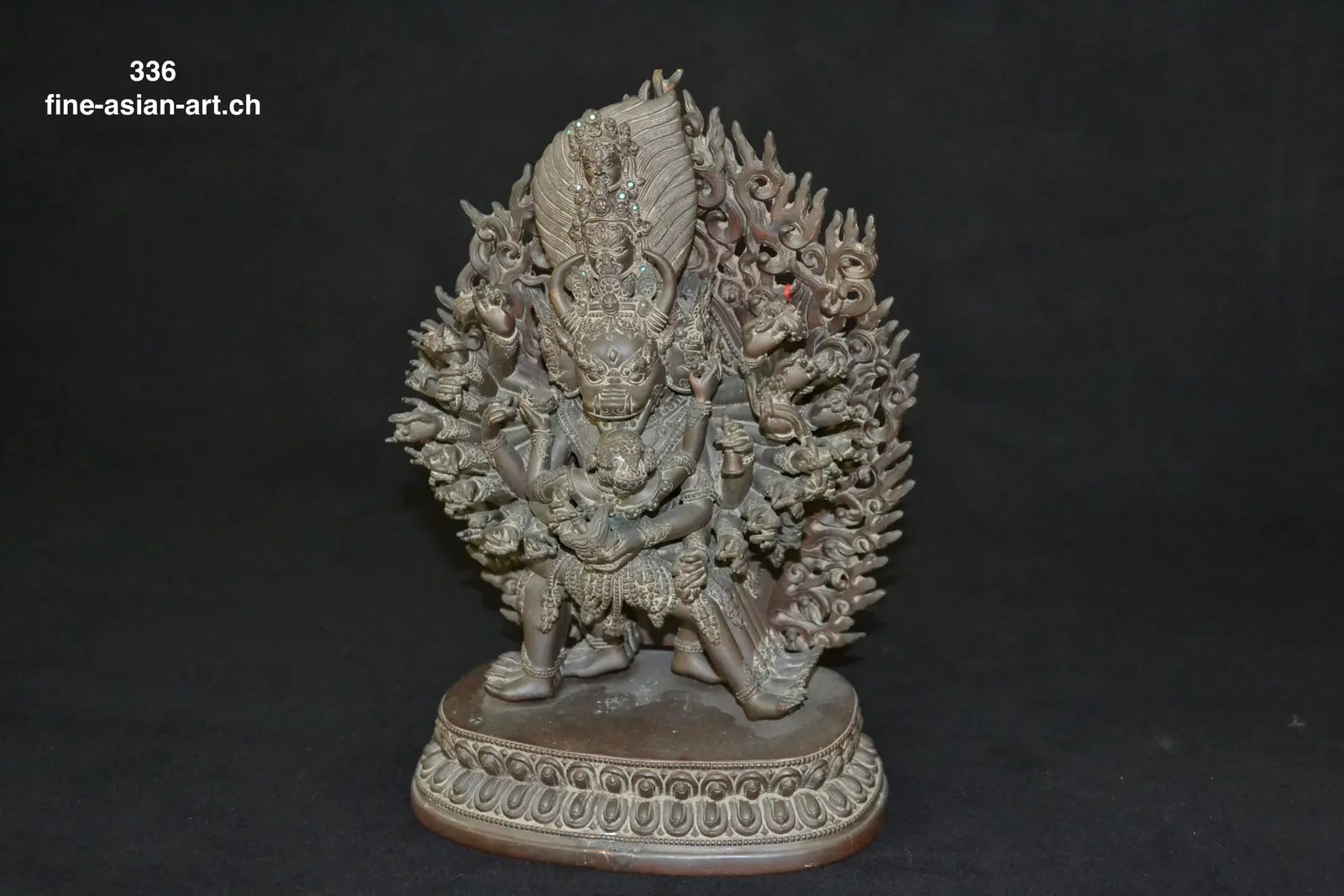
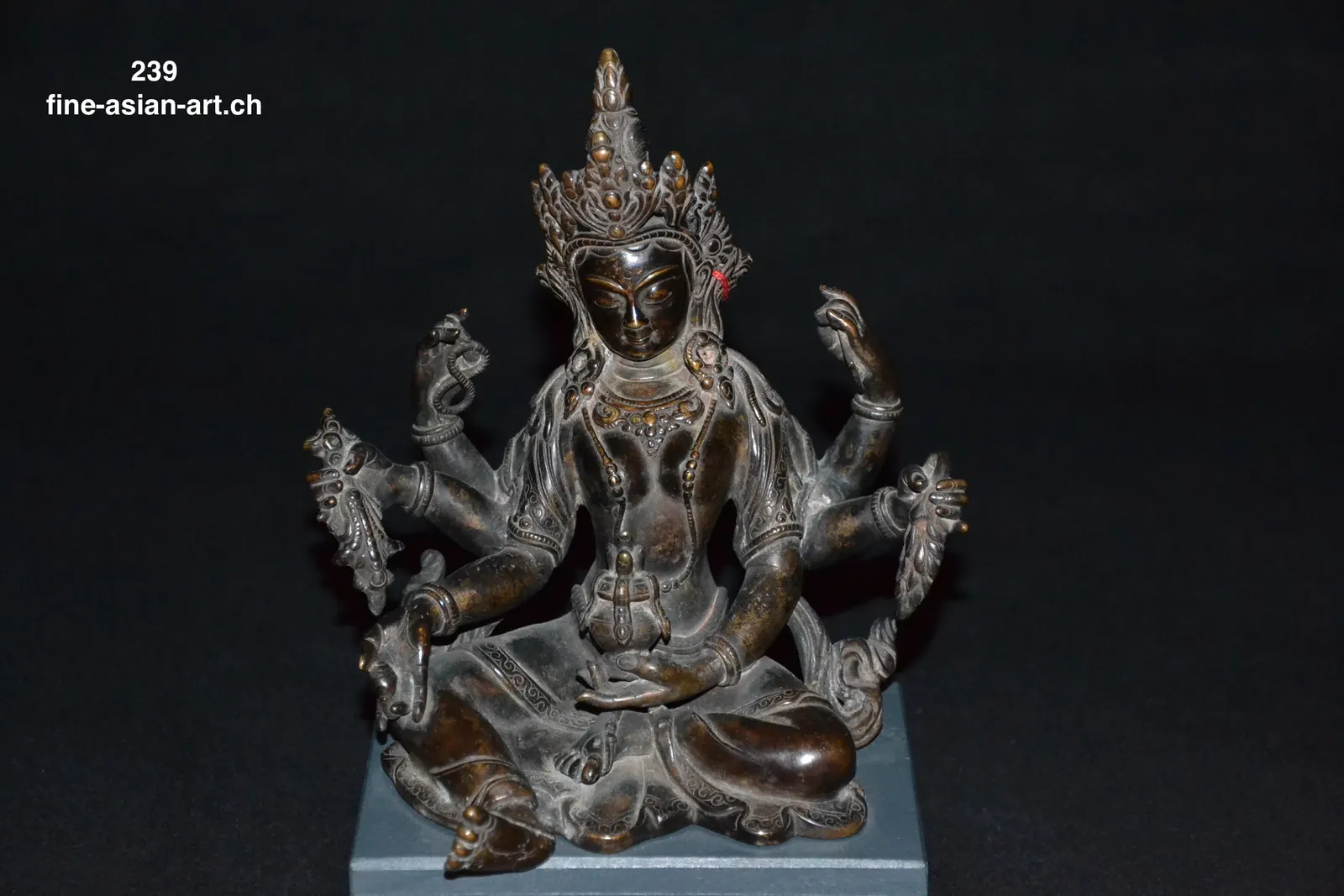
The colour of exposed metal gives a first hint. In our collection, ref. 05-038, a Medicine Buddha, shows a reddish copper-coloured surface with a silvered crown, ref. 255 has a golden-brass tone, and ref. 336, a Yamantaka, is described as dark bronze with a dark patina. These are visual observations, not lab results, and you should treat any seller’s alloy claim the same way.
Cast or repoussé: how was the statue made?
Most Himalayan figures are made by lost-wax casting: a wax model is encased in clay, the wax melted out and metal poured in. Larger figures are often cast in several parts and joined, so seams, pins or separately cast arms and attributes are normal rather than a warning sign.
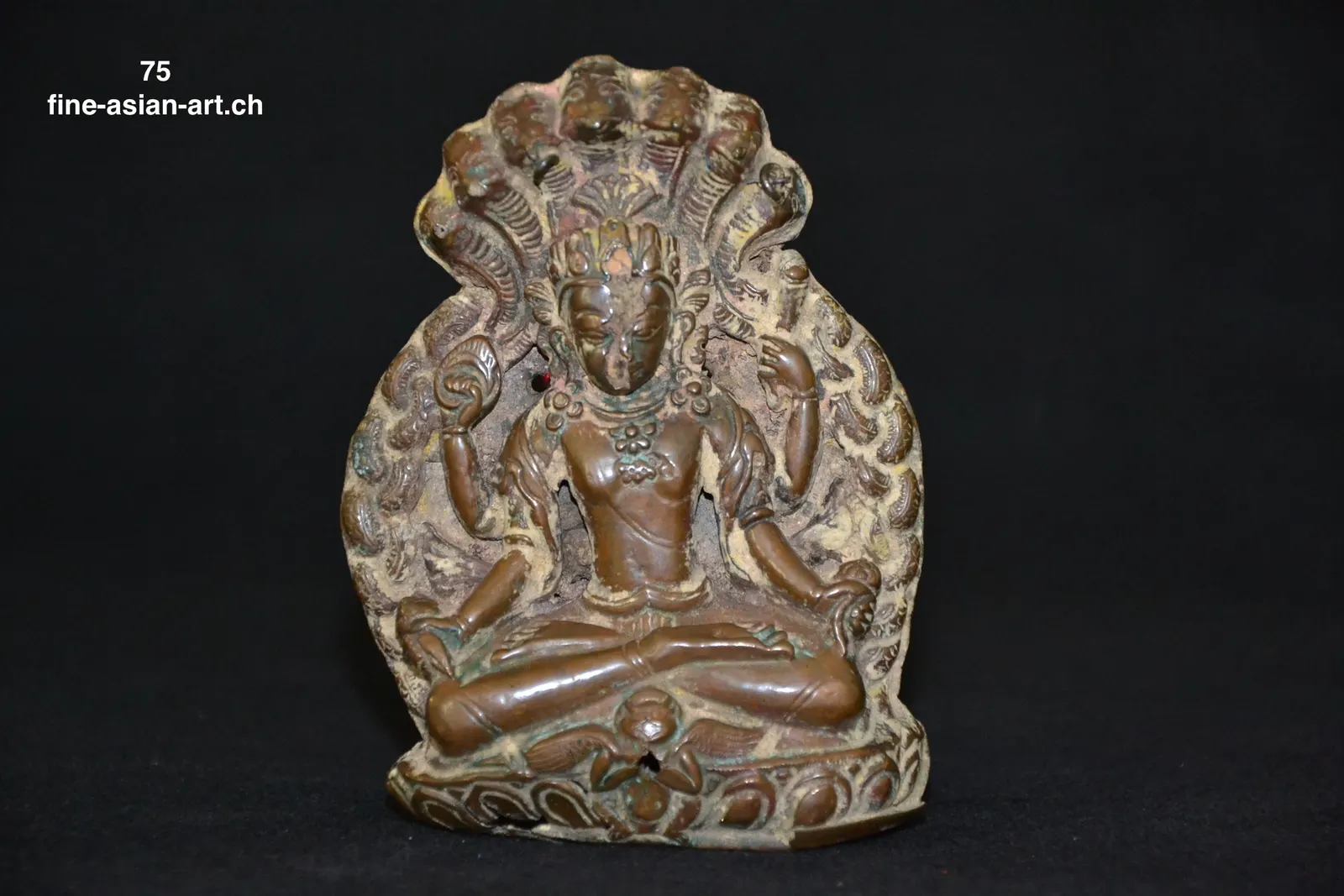
The Newar craftsmen of the Kathmandu Valley, above all in Patan (Lalitpur) and Kathmandu, have for centuries supplied Tibet with metal images and also mastered repoussé, hammering sheet copper from the reverse into relief. Repoussé is typical for very large figures, aureoles, thrones and decorative bases; ref. 06-107, a turquoise Padmasambhava, sits on a repoussé base with a cloud or wave design.
A good casting shows crisp detail in jewellery, fingers, facial features and lotus petals, with tooling and chasing added after casting. Soft, blurred details, porous pitting all over and a lumpy interior can indicate a mediocre or recast piece, though condition and workshop level vary widely in genuine works too.
Fire gilding or gold paint: how can you tell?
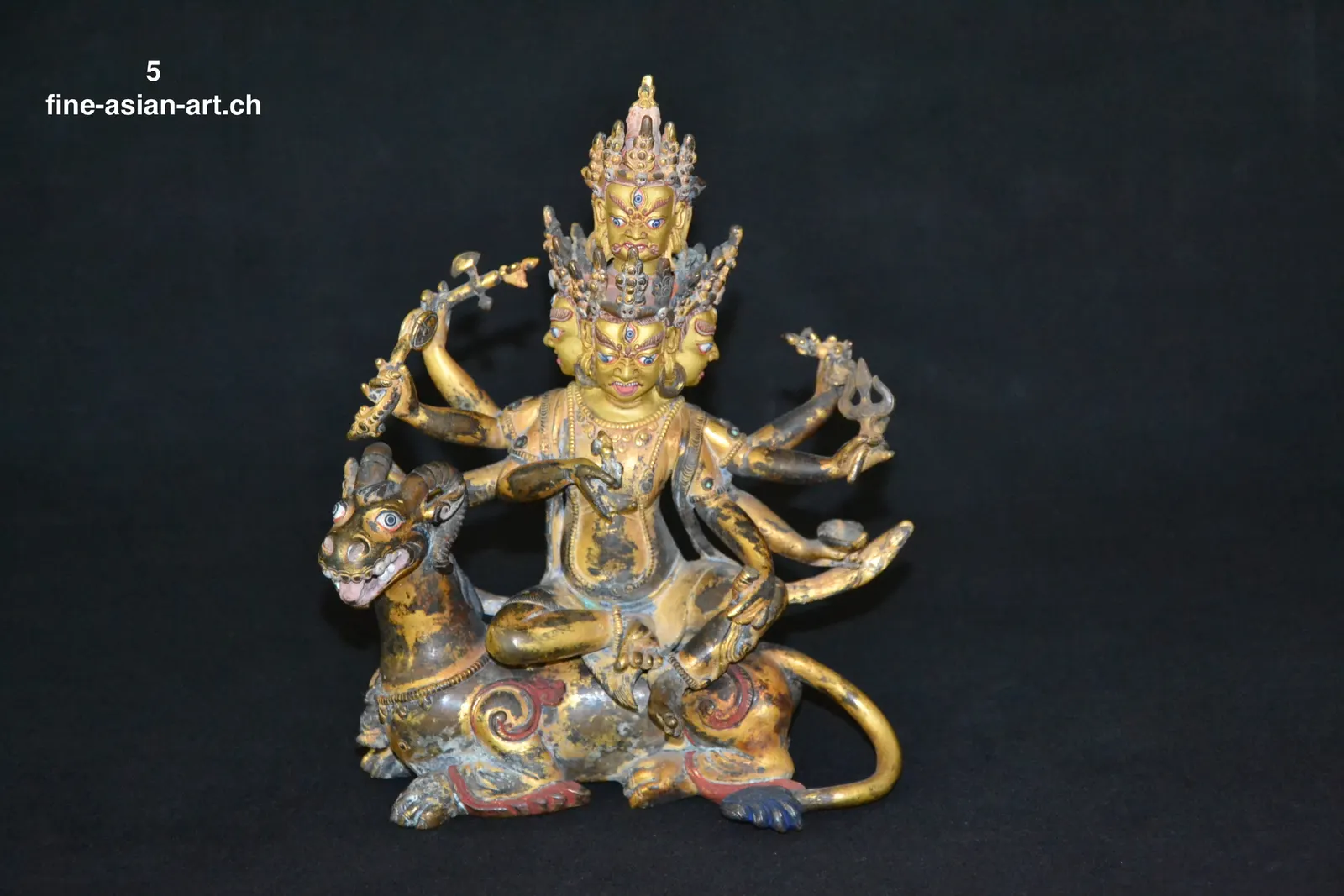
Traditional gilding is fire (mercury) gilding: gold dissolved in mercury is applied and heated until the mercury evaporates, leaving a thin gold layer bonded to the copper. It has a warm, soft lustre and, where worn, thins gradually to reveal the copper beneath, typically on high points such as the knees, nose and hands.
Gold paint or later electroplating tends to look flatter or brassier, may flake rather than wear, and sometimes covers areas that would never have been gilded, such as the underside. Repairs and regilding are also common on devotional objects, so a mixed surface is not necessarily suspicious, but it should be described honestly. Many pieces in our collection are catalogued as 'gilt-surfaced' or 'appears to be gilt' precisely because the method cannot be confirmed from photos alone.
What do painted faces and blue hair tell you?
Many Tibetan statues have faces painted with cold gold, a paste of powdered gold applied without heat, and hair painted in blue pigment, traditionally associated with lapis lazuli or azurite. This painting was frequently done in Tibet when a statue was consecrated or renewed in a temple, so it is often read as a sign that the figure was used in devotional practice.
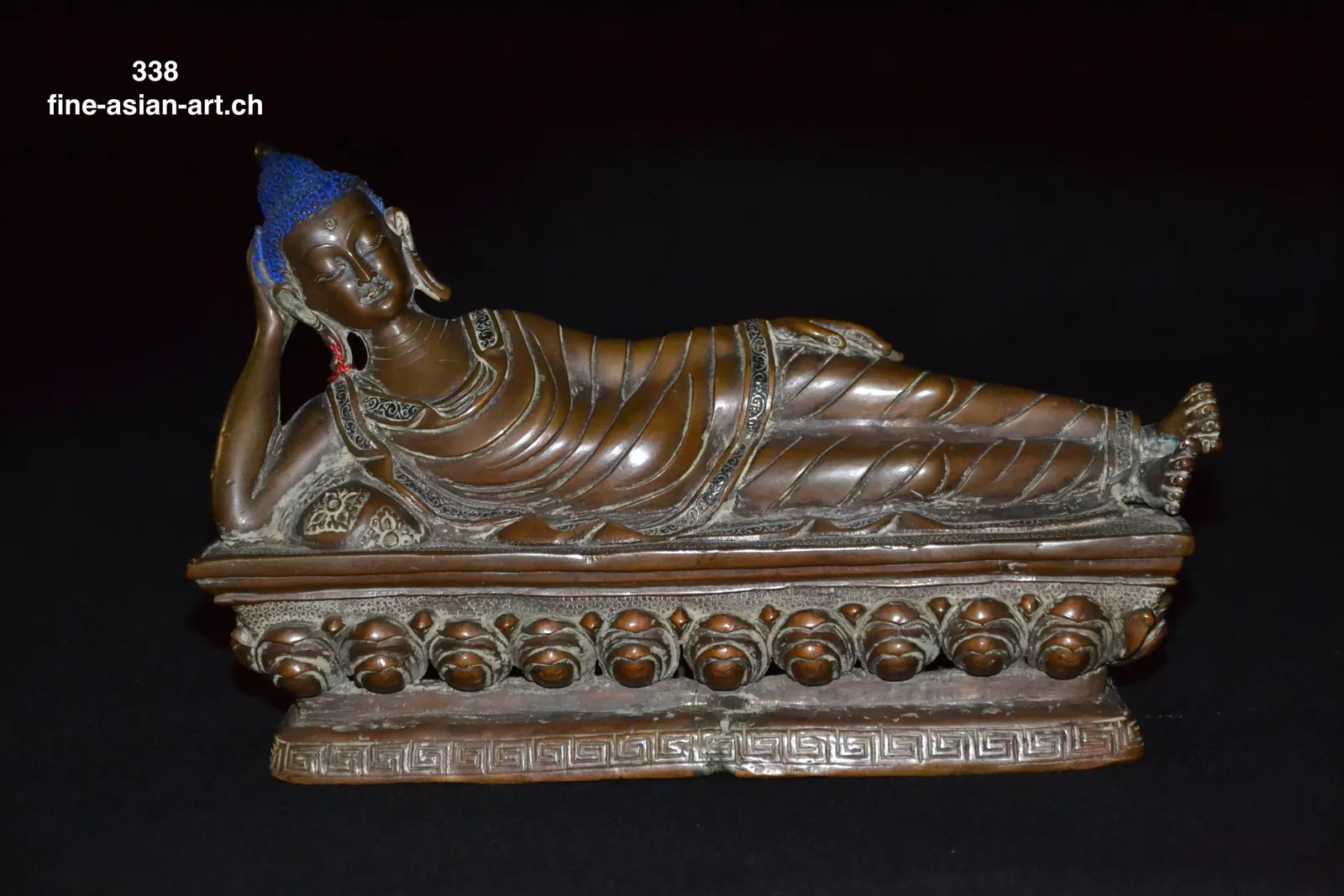
Examples in our collection include the Medicine Buddha ref. M-089 and the bodhisattva ref. 230, both with blue-painted hair, and the Shakyamuni ref. SAH-14 with dark-painted hair. Painted surfaces can of course be added at any time, so judge whether the pigment looks aged and consistent with the rest of the surface rather than freshly applied.
How do you read the base and the consecration?
Turn the statue over. Consecrated figures are typically filled with rolled mantras (zung), grains, relics or other sacred substances, and the base is closed with a sealed copper plate. Plates are often engraved with a double vajra (vishvavajra), the crossed thunderbolt symbolising stability.
An intact seal suggests the contents have not been disturbed; an opened, missing or replaced plate is common and not in itself negative, as many statues were emptied when they left their original setting. Look at whether the plate, its fit and its crimping or pins have aged like the rest of the figure. Many collectors prefer not to open a sealed base, out of respect for the consecration.
Inlays, wear and artificial ageing
Statues, especially Nepalese ones, are often set with turquoise, coral or other stones in crowns and jewellery. Some losses are normal over time, and replacement stones or glass are frequent; check whether settings are original and whether the stones match in colour and fit. Ref. SAH-02, a Vajrasattva, shows turquoise-coloured accents on a gilt surface.
Genuine wear follows handling and devotion: rubbed high points, softened edges on the side that was touched, dust and residue of offerings in recesses, and gilding thinning where hands rested. Artificial ageing often looks uniform, with chemical patina in places no hand would reach, acidic green crusts, or dirt that wipes off. Ask yourself whether the wear pattern could plausibly result from use.
Proportions, style and regional attribution
Himalayan images follow iconometric canons that define proportions in units based on the face or finger width, along with the correct posture, gesture (mudra) and attributes for each deity. Awkward proportions or wrong attributes can point to a weak workshop or a decorative reproduction, though regional and period variation is real.
Stylistic clues, such as Newar-style jewellery, Tibetan lotus-petal shapes or Chinese-influenced throne forms, can suggest where a piece was made, but attributions are often debated even among specialists. Treat confident labels like 'Tibet, 15th century' with caution unless they are supported by reasons; our own catalogue usually says 'Himalayan region' or 'Nepal or Tibet' for this reason.
Silver figures, questions to ask and photos to request
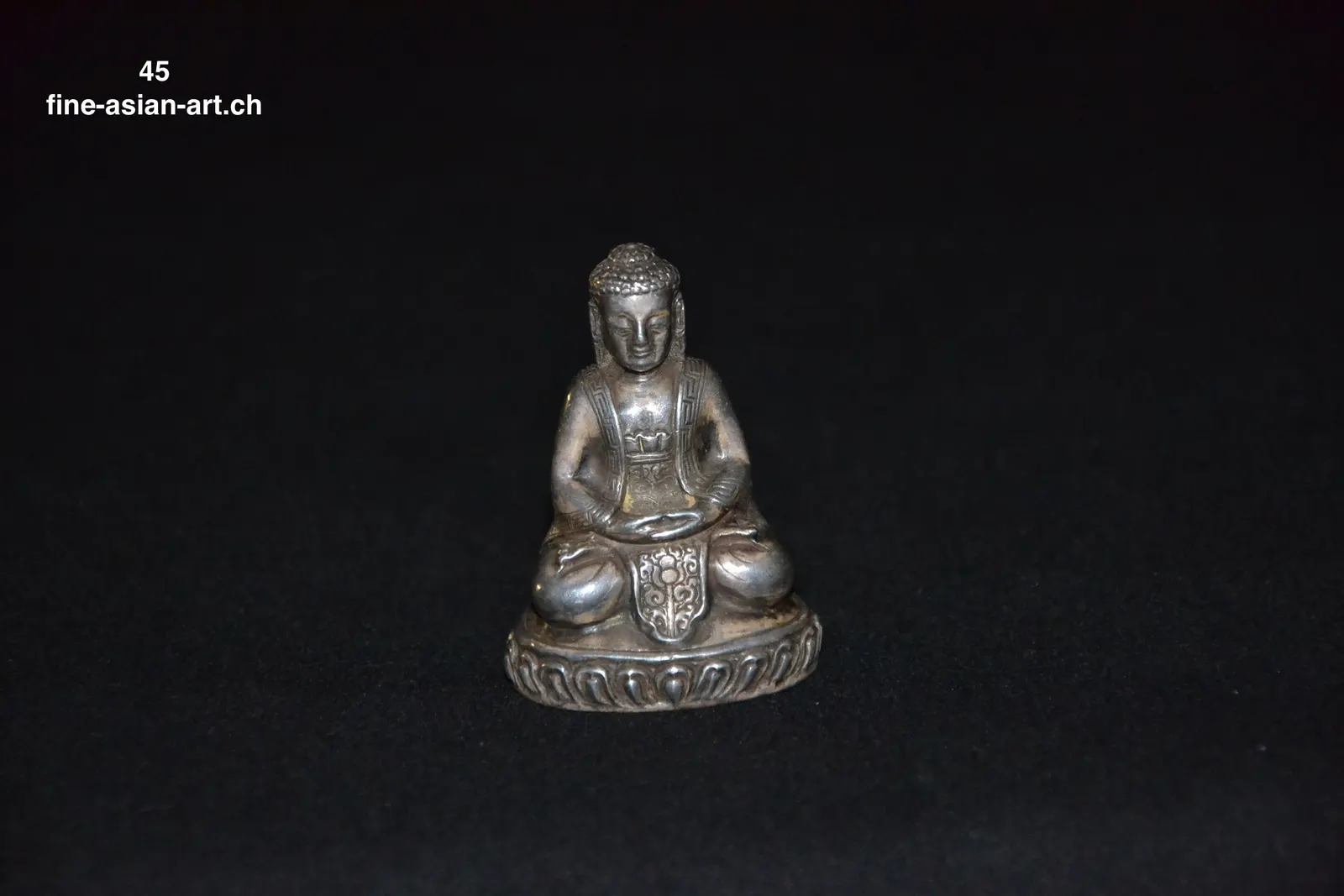
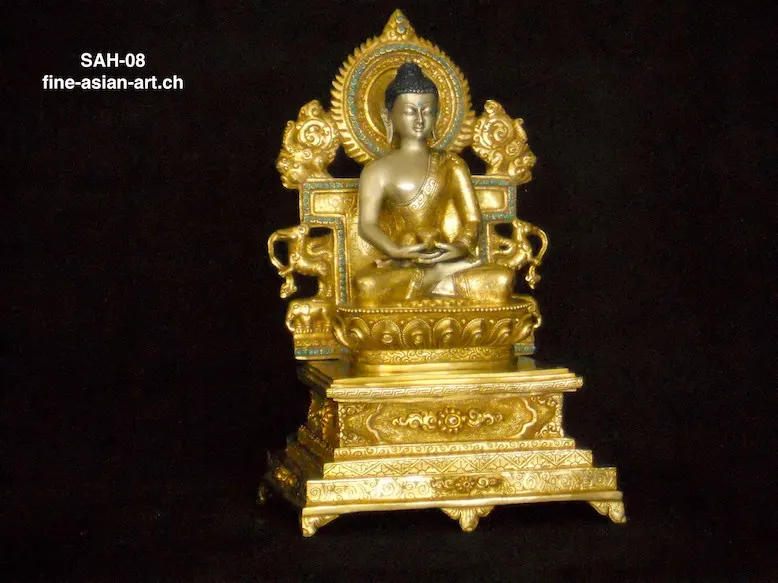
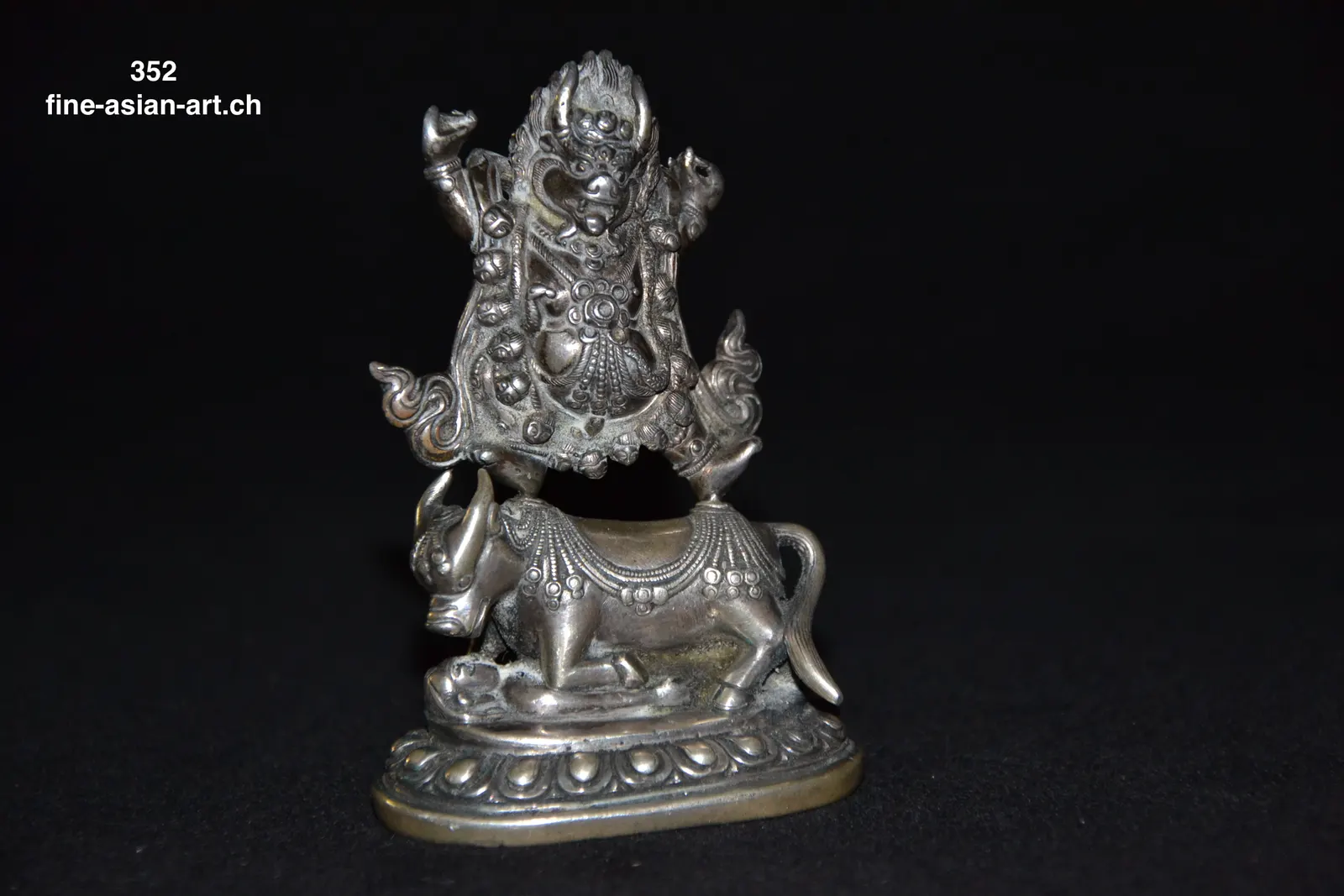
Silver figures are smaller and rarer; they are often cast, sometimes partly gilt, and can be combined with gilt thrones, as with our silver Amitabha ref. SAH-08 on a gilt throne, or ref. 45, a 6 cm silver Shakyamuni listed at 90 g. Silver tarnishes grey to black, and its purity varies, so ask for weight and any hallmark information.
Before buying, ask: Is the base sealed, opened or replaced? What is the gilding method, as far as the seller knows? Are there repairs, regilding, replaced inlays or attributes? What is the known provenance and how long has the piece been in the current collection? Also check the import and export rules of the countries involved with the relevant authorities.
Request clear photos of the base (straight on and angled), the back, both sides, and close-ups of the face, hands, crown, inlays and any worn areas, ideally in daylight. For pieces from our collection, ask us: additional photos and information are available on request.
Questions and answers
Is a Tibetan 'bronze' statue really made of bronze?
Often not strictly. Many are copper or brass; 'bronze' is used loosely in the trade for copper alloys.
How can I tell fire gilding from gold paint?
Fire gilding has a soft, warm lustre and wears thin gradually to the copper on high points. Paint tends to look flatter, may flake, and often covers areas that were never gilded.
Should I open a sealed base?
Generally no. Many collectors leave sealed bases closed out of respect for the consecration, and an intact seal is part of the object's history.
Does blue-painted hair mean a statue is old?
Not by itself. Cold-gold faces and blue hair are typically linked to consecration in Tibet, but paint can be added at any time, so judge it together with the rest of the surface.
Are missing turquoise or coral inlays a problem?
Some losses or replacements are normal on devotional objects. What matters is that they are disclosed and that original settings remain recognisable.
Which photos should I ask for before buying?
The base, the back, both sides, and close-ups of face, hands, crown, inlays and worn areas, ideally in daylight.
Written by Fine Asian Art as general background. It is not an appraisal of any individual piece; ask us about a specific object.