Tibetan Ritual Objects and Ghau Amulet Boxes Explained
Tibetan ritual objects are tools of Vajrayana Buddhist practice: each form, from the vajra and bell to the phurba dagger, carries a precise symbolic meaning. Ghau (gau) boxes are portable amulet shrines, often of silver set with turquoise and coral, that Tibetans and other Himalayan peoples wore or carried for protection, especially when travelling.
Updated
What are Tibetan ritual objects used for?
Tibetan ritual objects are instruments of Vajrayana (tantric) Buddhism, used in monastic liturgy, meditation, empowerments and festivals. They are not decorative in origin: each object embodies a teaching, and handling it correctly is part of the practice. Many are also found on household altars.
The repertoire is large: hand implements such as the vajra, bell and phurba; offering vessels and ewers; the conch (sankha) blown as a horn; altar stupas (chorten); masks for ritual dance; and personal devotional objects such as the ghau. The same symbols recur across these categories, so understanding a few key forms helps to read almost any piece.
Why do the vajra and bell always appear as a pair?
The vajra (Tibetan dorje) and the bell (Sanskrit ghanta, Tibetan drilbu) are the essential pair of tantric practice. The vajra, a double-ended sceptre whose prongs close around a central axis, stands for indestructible enlightenment and for skilful means or compassion. It is held in the right hand.
The bell, held in the left hand, represents wisdom, particularly the wisdom that realises emptiness; its handle is usually topped with a half-vajra and often a face associated with the goddess Prajnaparamita. Used together, the two express the union of wisdom and method that, in Vajrayana teaching, leads to awakening. A vajra on its own also appears widely as a motif, for example as the finial of other ritual implements.
What is a phurba?
A phurba (Sanskrit kila) is a ritual dagger with a three-sided blade, typically rising from the mouth of a makara sea-monster and topped with a handle bearing one or more wrathful faces of the deity Vajrakilaya. It is not a weapon: in ritual it is used to "pin down" and transform obstacles, negative forces and destructive emotions.
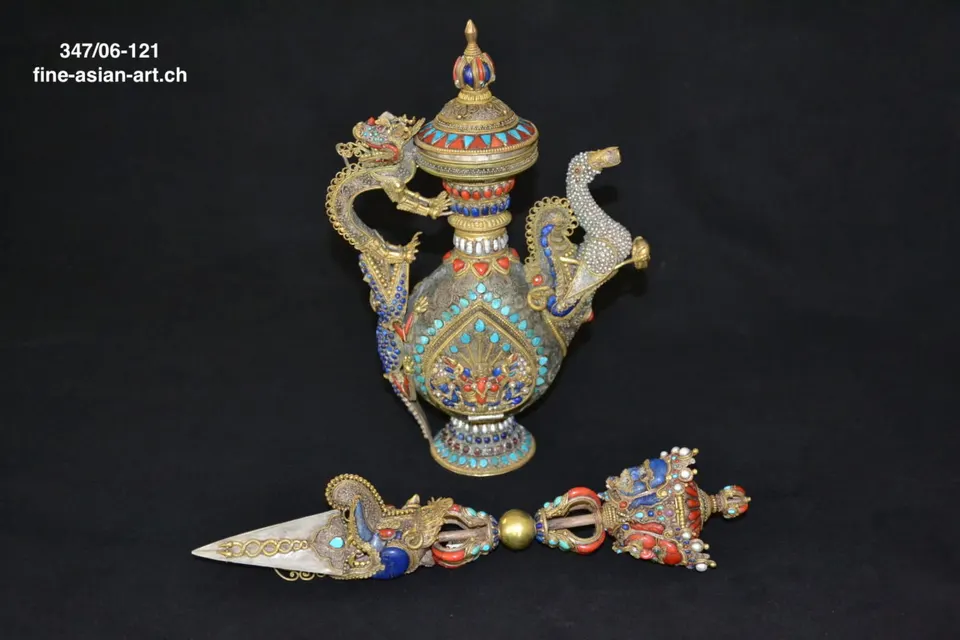
Phurbas were made in wood, bronze, iron, bone and precious metals. In the collection, ref. 347 is offered as a set: a silver filigree tea pot together with a silver phurba (ref. 06-121), the handle decorated with stones in the same manner as the pot.
Kartika and kapala: how should these tantric symbols be understood?
The kartika (flaying knife, Tibetan drigug) has a crescent blade and a vajra handle; the kapala is a skull cup. Both are attributes of wrathful deities and dakinis, and their imagery can seem disturbing to outsiders. In Buddhist understanding they are symbols of cutting through ego and ignorance and of impermanence, not of violence.
Kapalas were traditionally made from human skull caps and were used on altars to hold offerings; many are mounted in silver or gilt metal, and later examples may be of metal throughout. These are sacred objects in a living religion, and they deserve to be handled and displayed with respect. Note that objects containing human remains may be subject to special legal rules in some countries.
Masks, vessels and other offering objects
Masks are used in cham, the masked ritual dances performed at Tibetan monastery festivals, in which dancers embody protectors and wrathful deities. In the Kathmandu Valley, masks of the fierce guardian Bhairava are also used in Newar festivals and at shrines; ref. 05-052 in the collection is a Bhairava mask showing bulging eyes, a third eye, fangs and a crown of skulls, and appears to be metal with remains of gilding.
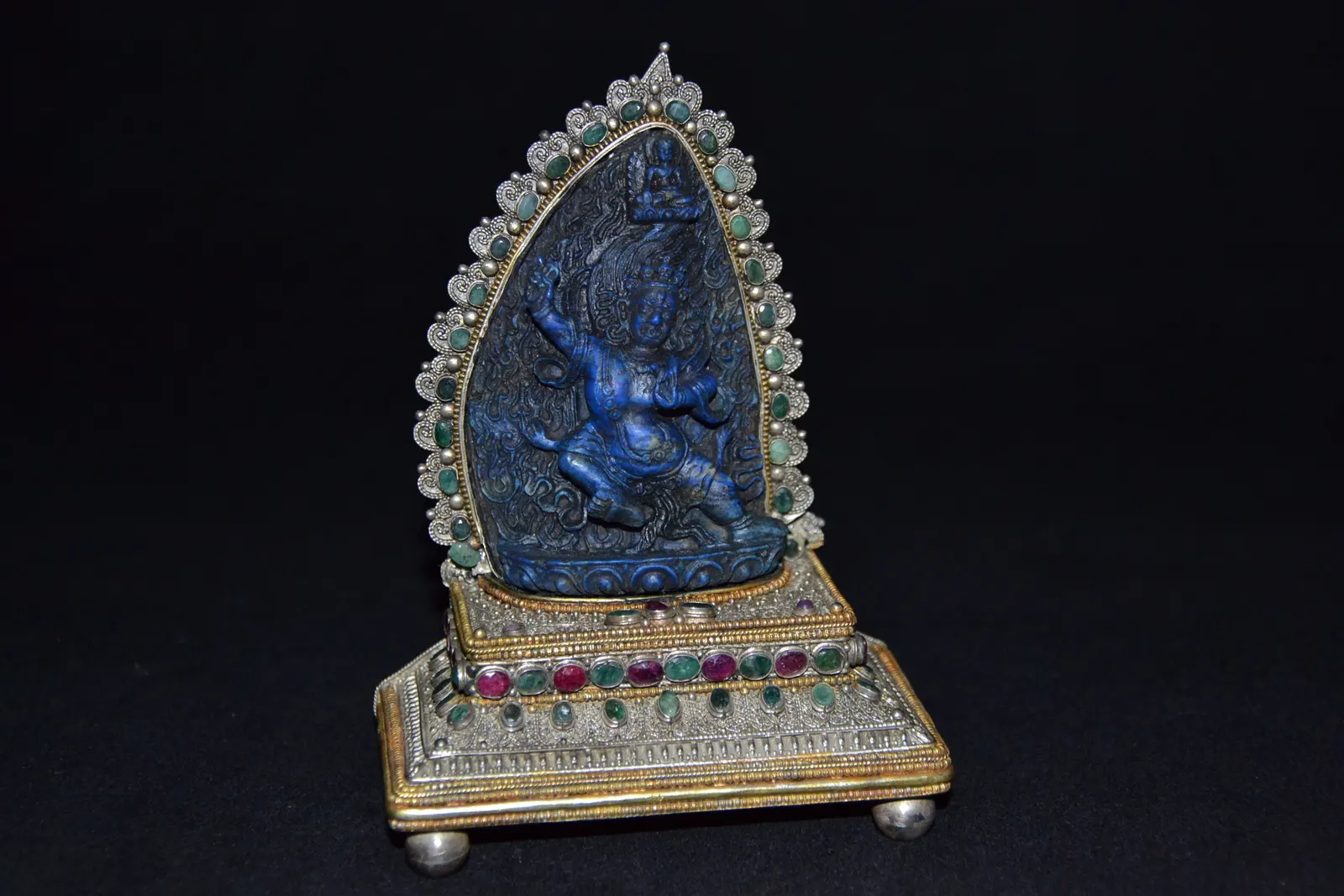
Offering vessels range from water bowls and ewers to elaborate pots for tea or consecrated liquids. Silver examples with filigree and stone settings, such as the tea pot ref. 347 with dragon spout and handle, show how secular luxury and ritual use overlap. The conch (ref. 05-050), one of the eight auspicious symbols, and altar stupas such as ref. 05-021 also belong to the altar furnishings.
The collection also contains a pair listed as "Katar dagger" (ref. 236-M323): each has a curved, crescent-like steel blade emerging from a red and green painted makara mouth and a handle ending in a vajra, which appears to be gilt. The listing name differs from the Indian push-dagger usually called katar; the vajra handle places them in the ritual sphere.
What is a ghau (gau) box and what is inside it?
A ghau (also spelled gau or gahu) is a portable shrine or amulet box. It typically holds a small image of a protective deity, printed or written mantras and prayers, and sometimes blessed items such as tsa-tsa clay tablets, relics, pills or fragments of a lama's robe. A small window in the front often shows the image inside.
Ghaus were worn around the neck, across the body or at the belt, especially by travellers, traders and pilgrims crossing the mountains, and smaller ones were often worn by women as jewellery. Larger examples were carried and set up as a travelling altar. Made of copper, brass, silver or gold, they displayed both the wearer's faith and status.
Ghau shapes, decoration and regional styles
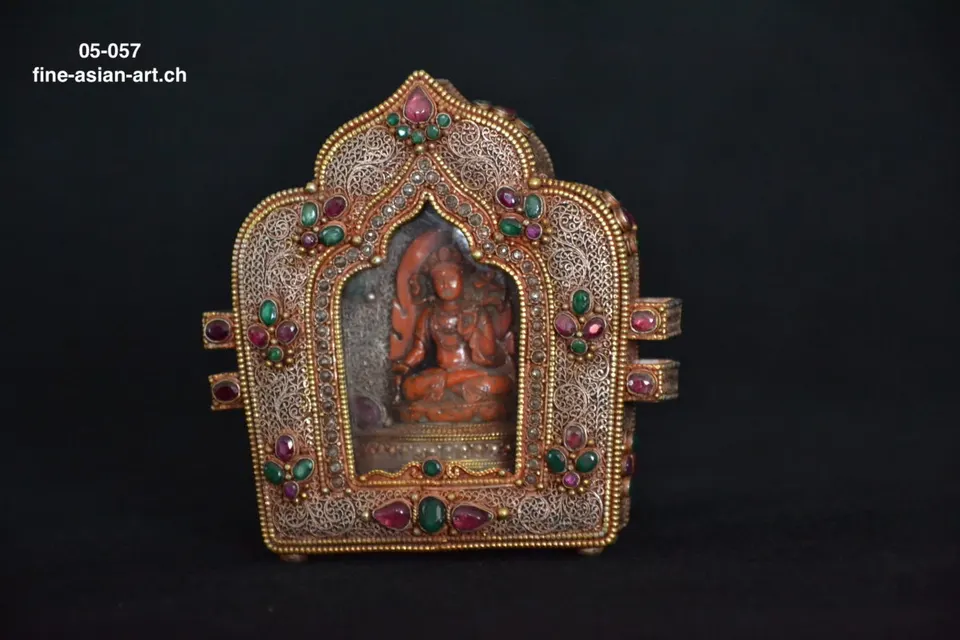
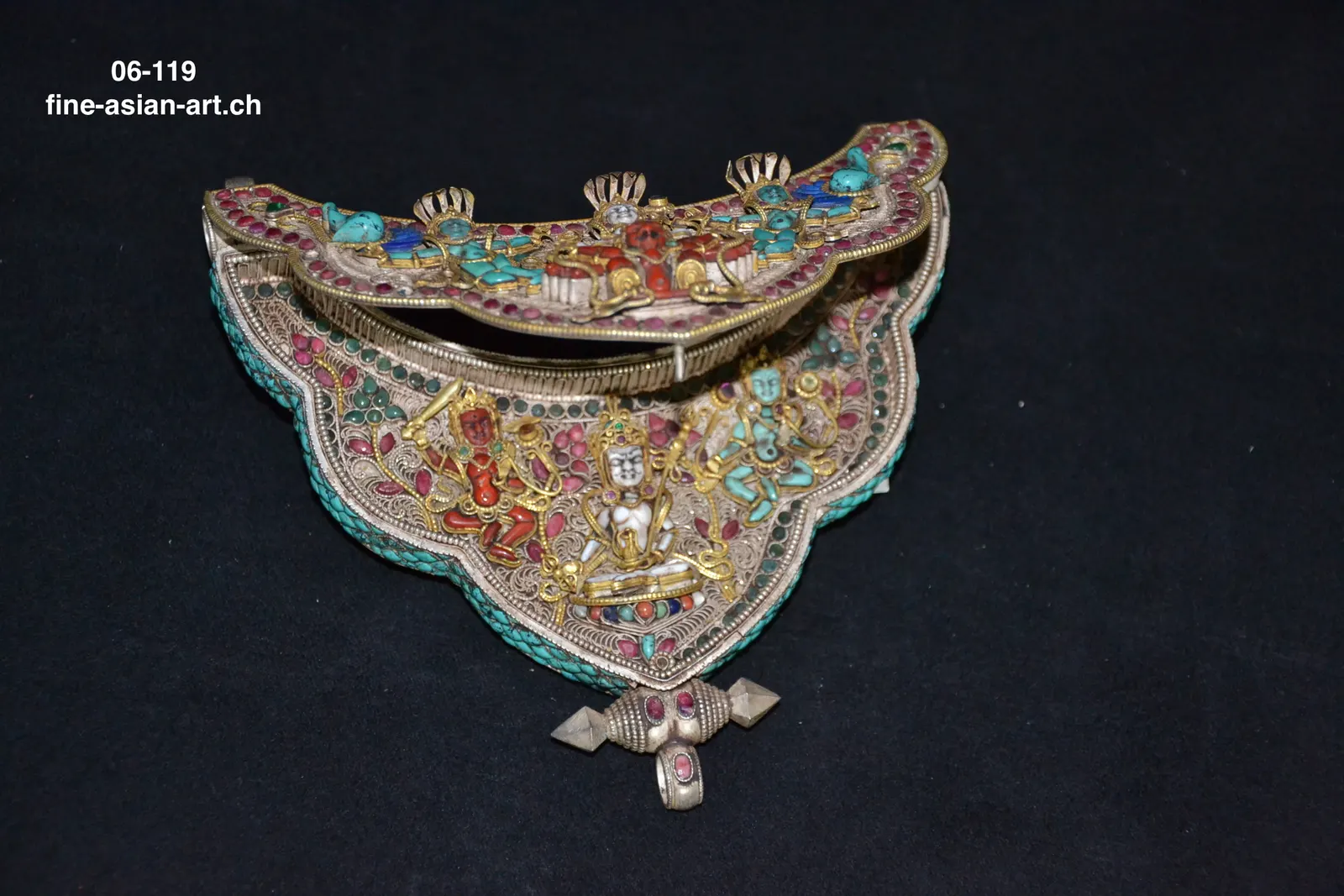
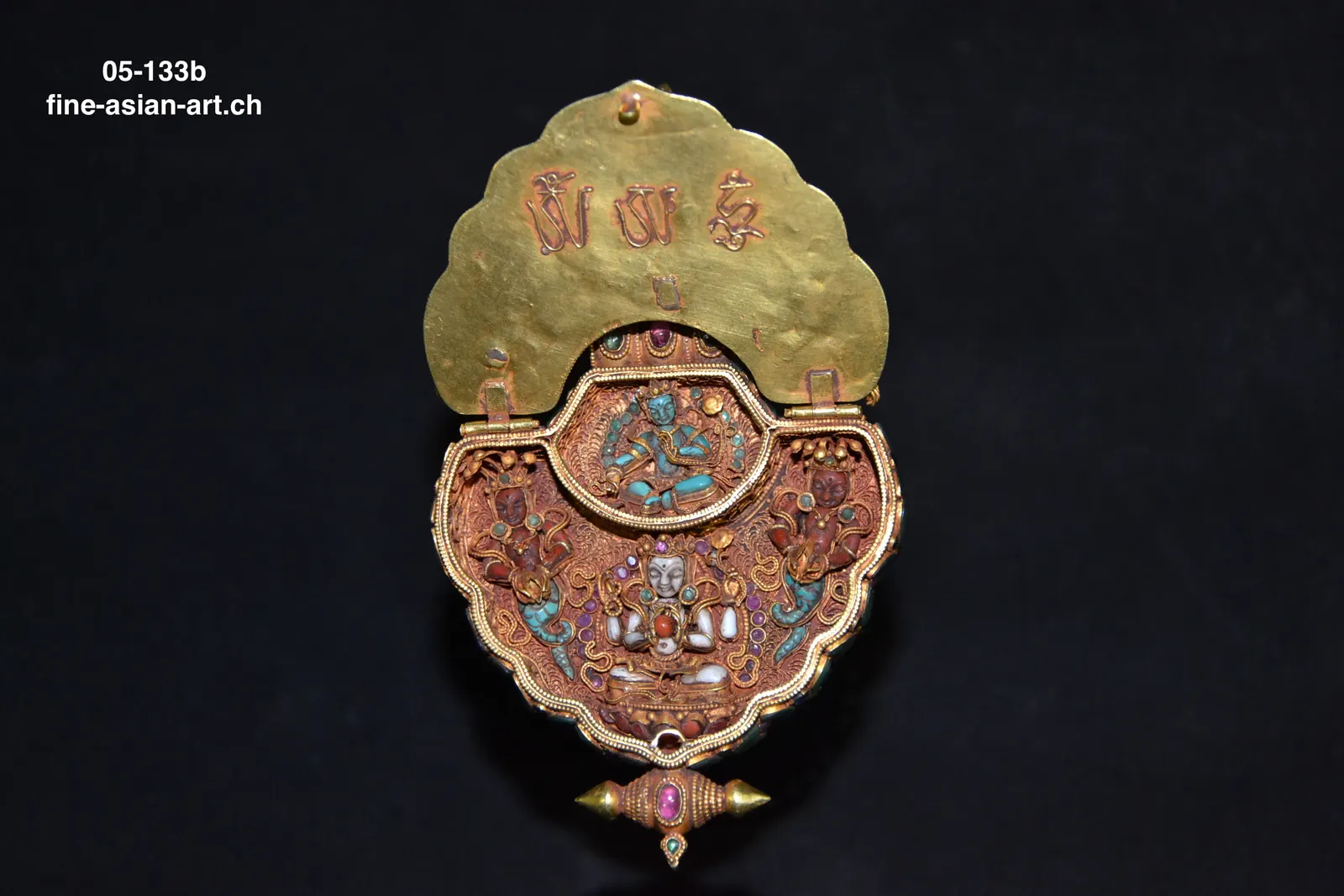
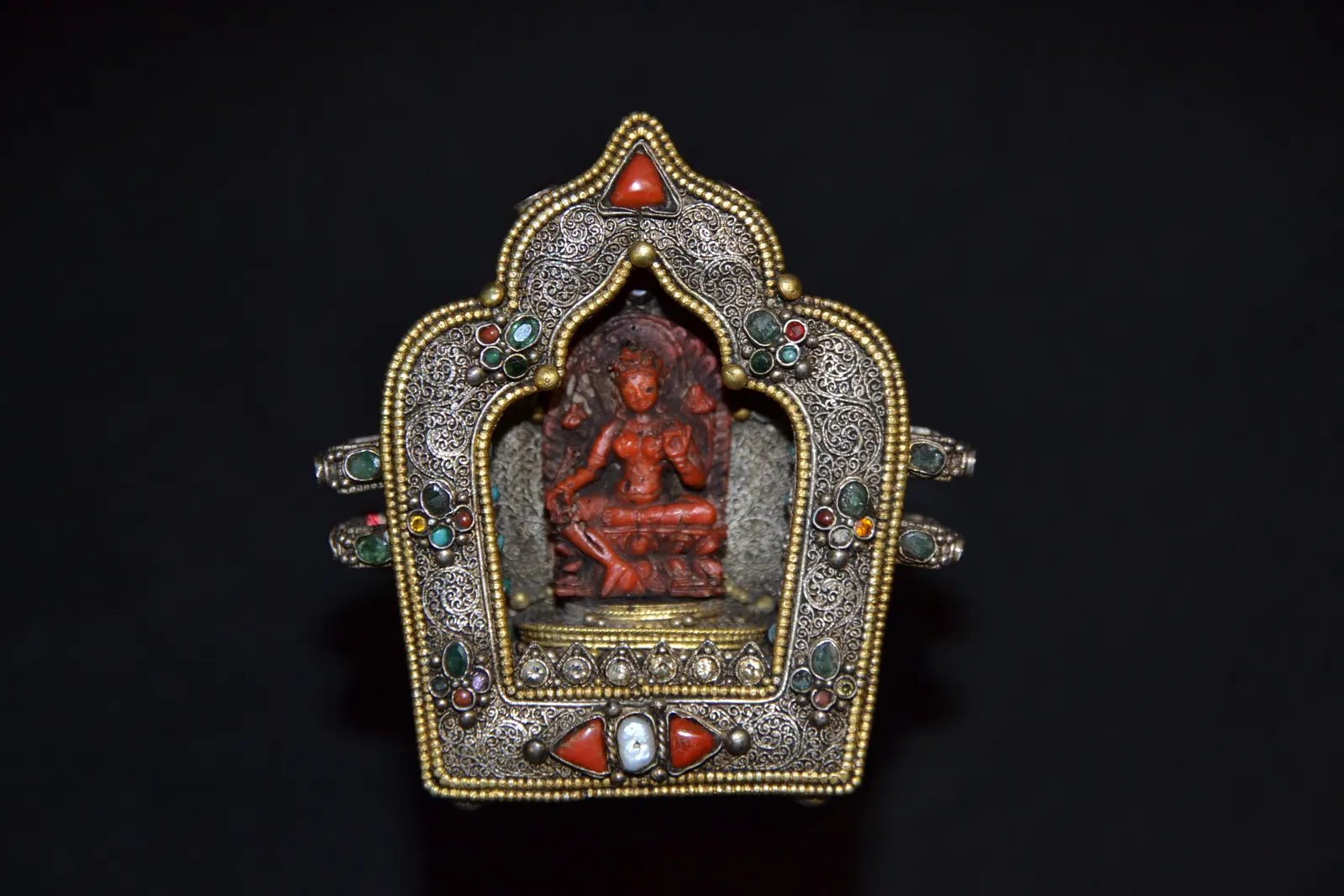
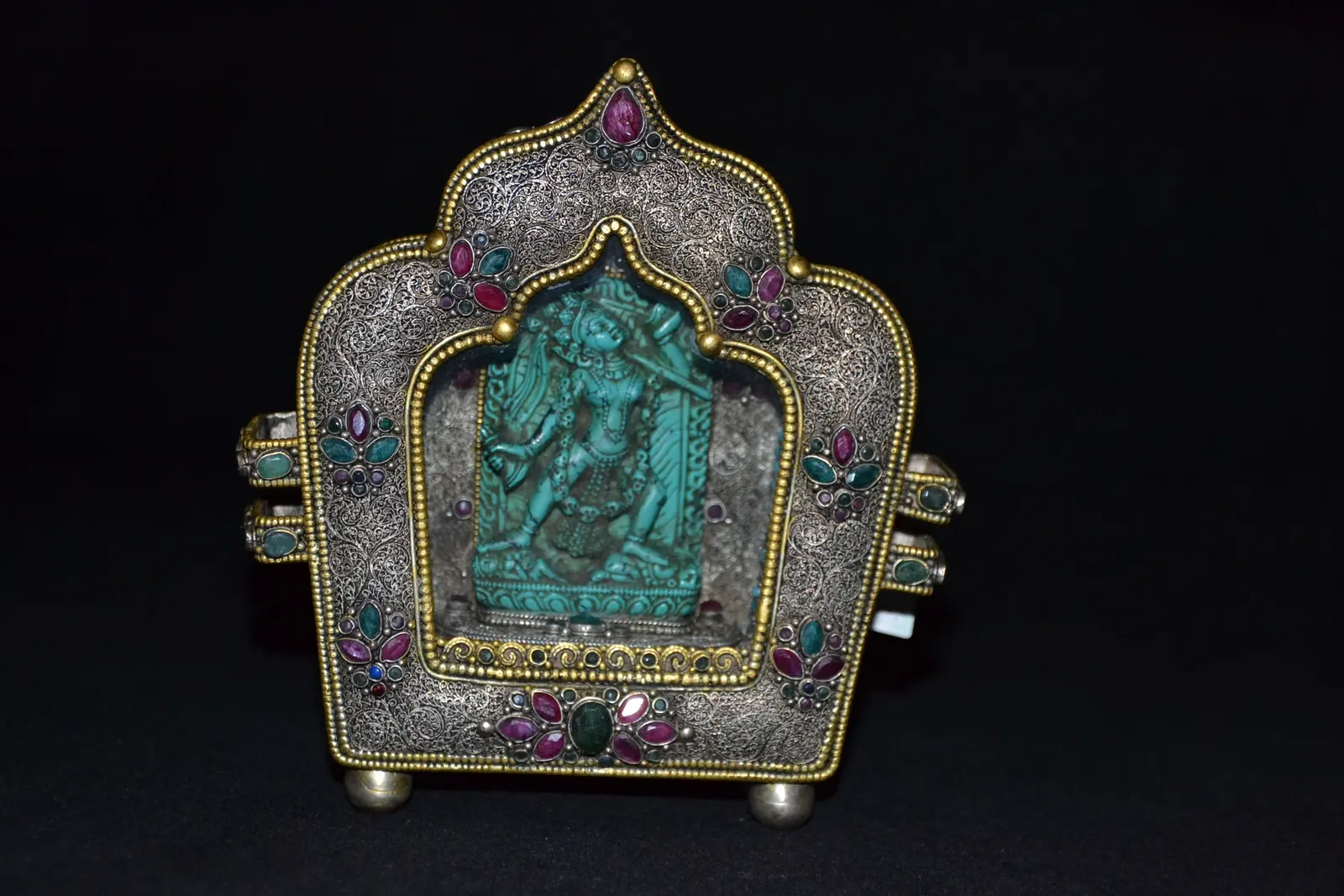
The two classic shapes are the round or oval box and the shrine-shaped box with an arched or pointed top, the latter echoing a temple niche. Square and wing-shaped forms also occur. In the collection, ref. 05-057 is an arched filigree ghau with a coral Tara, ref. 06-119 a wing-shaped case densely set with turquoise and coral-coloured stones, and ref. 06-133 a small gold ghau with Mahakala and an engraved hinged lid.
Decoration is usually repoussé (hammered from behind) and chased silver or copper, often with filigree, auspicious symbols and settings of turquoise and coral. Regional attributions such as Ladakhi, Central Tibetan or Nepalese are often made from style, for example Ladakhi pieces are frequently associated with heavy turquoise settings, but such attributions are generally approximate and should be treated with caution.
Coral and turquoise: what should a buyer look for?
Turquoise and coral are the most prized stones in Tibetan ornament. Old natural turquoise often shows matrix veining, slight wear and a colour that may have shifted towards green over time; old coral tends to have small pits, a soft lustre and variations of tone. These are only general indications, not proof of age.
The market also contains dyed, stabilised or reconstituted turquoise, imitation coral and glass or plastic substitutes, and stones in old settings have sometimes been replaced. Close inspection, good photographs and, for important pieces, gemmological testing can help. Some coral species are listed under CITES, so if you plan to move a piece across borders, check the current rules with the authorities of the countries involved; we can send additional photos on request.
Questions and answers
What is the difference between a dorje and a drilbu?
The dorje (vajra) is the sceptre held in the right hand and symbolises method or compassion; the drilbu (bell) is held in the left and symbolises wisdom. Together they represent the union of the two.
Is a phurba a weapon?
No. The phurba is a ritual dagger used symbolically to subdue and transform obstacles and negative forces, and it is associated with the deity Vajrakilaya.
What is kept inside a ghau box?
Usually a small deity image, mantras or prayers on paper, and sometimes blessed items such as clay tsa-tsas, relics or consecrated pills. The contents served as protection for the wearer.
How were ghau boxes worn?
They were worn on a cord around the neck or across the body, or attached to the belt, particularly when travelling. Larger shrine-shaped ghaus could be set up as a portable altar.
Can coral jewellery or ghaus be exported freely?
Not always. Some coral species are covered by CITES and other cultural-property rules may apply, so check the current regulations with the authorities of the countries involved before shipping.
Written by Fine Asian Art as general background. It is not an appraisal of any individual piece; ask us about a specific object.