How to Care for, Display and Ship Buddhist Statues and Thangkas
Most Himalayan bronzes and thangkas need very little care: handle them rarely and with clean hands, dust gently, keep them out of direct sun and away from damp, and never polish, scrub or open them. When in doubt, do less and ask a professional conservator.
Updated
How should I handle a Buddhist statue?
Handle with clean, dry hands or nitrile gloves. Skin oils and salts can mark metal and gilding over time, while cotton gloves can snag on crowns and jewellery and reduce your grip on smooth surfaces.
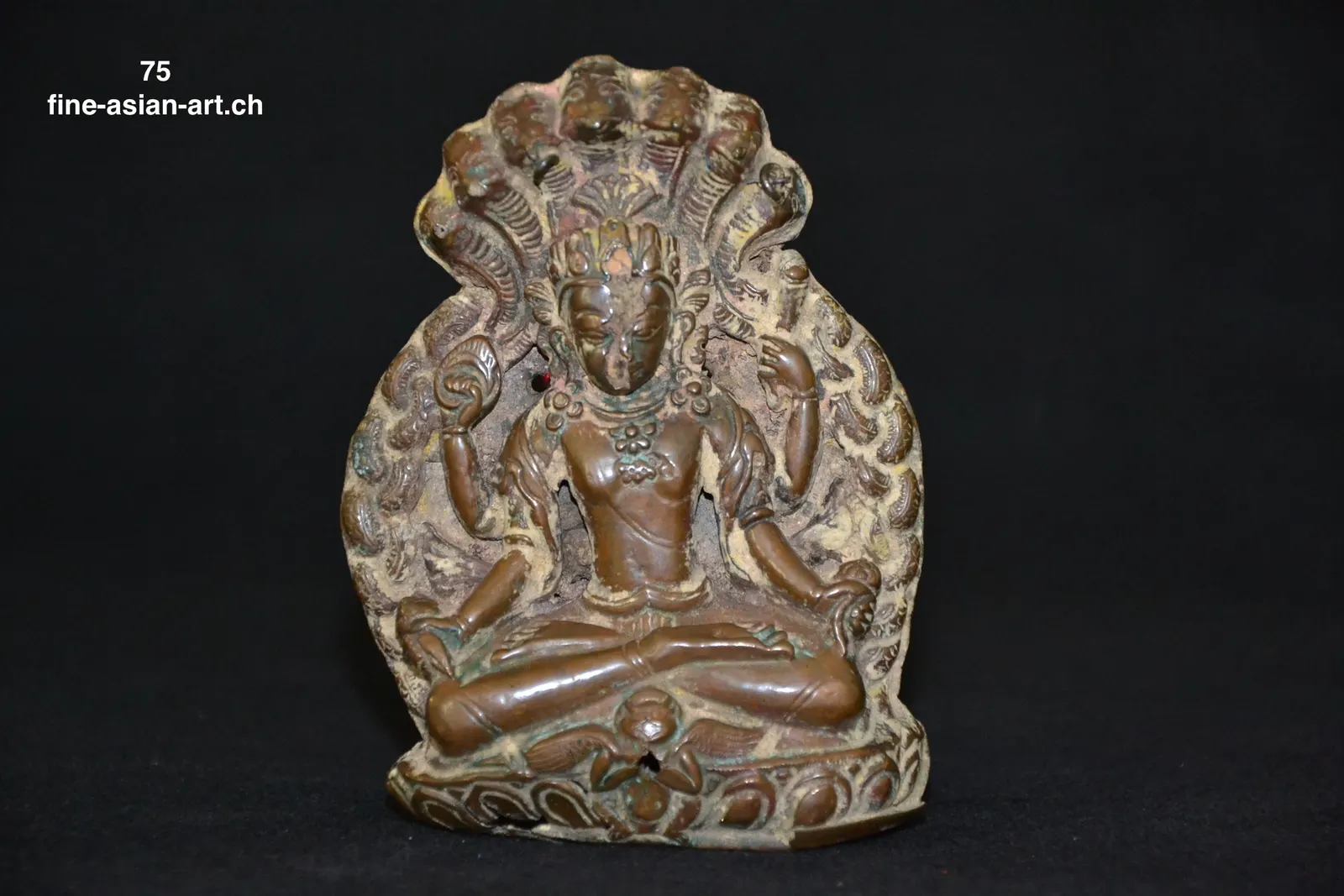
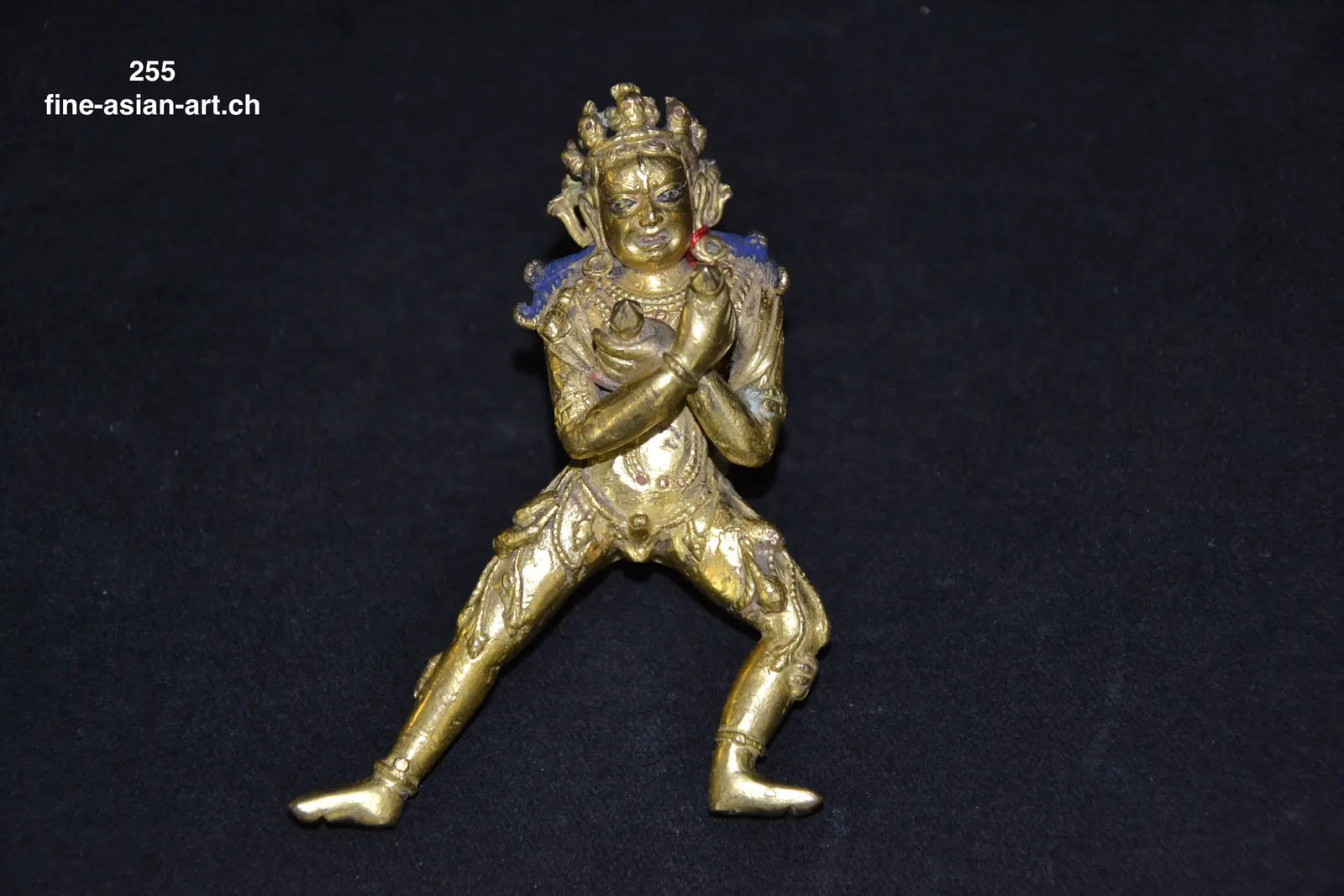
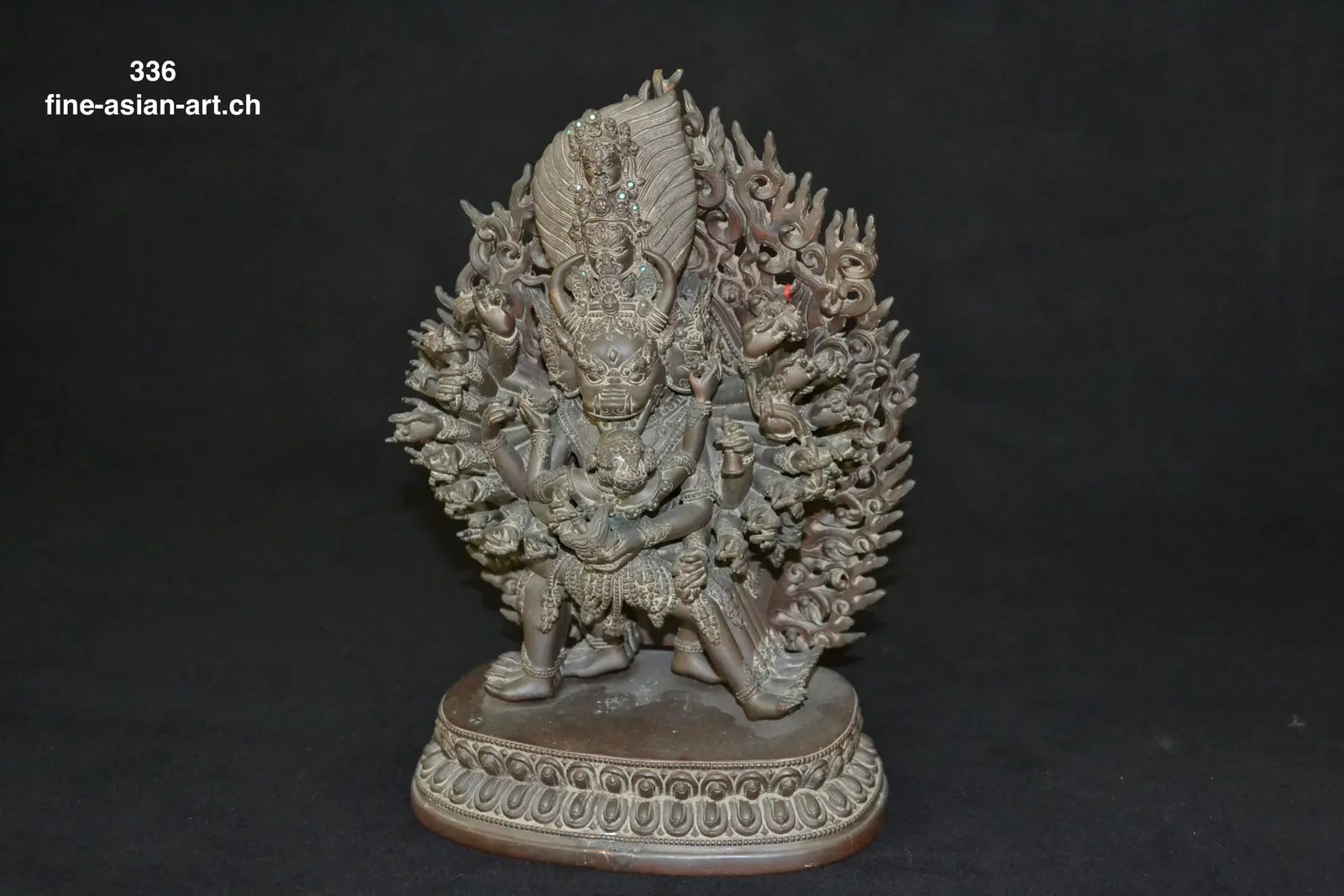
Always lift a statue from the base, supporting its weight from below with both hands. Never pick it up by the arms, the crown, the halo (prabhamandala) or attached attributes; these are often cast separately or are the thinnest parts and can bend or snap.
Before moving a piece, clear a path and decide where it will go. Remove rings and bracelets, carry one object at a time, and set it down on a padded surface rather than a hard tabletop.
How do I clean a bronze or gilt-copper statue?
For routine care, dust only: use a soft, clean brush (a soft make-up or hake brush works well) and work gently into recesses. Avoid cloths that can catch on fine details, and never use water, metal polish, solvents or household cleaners.
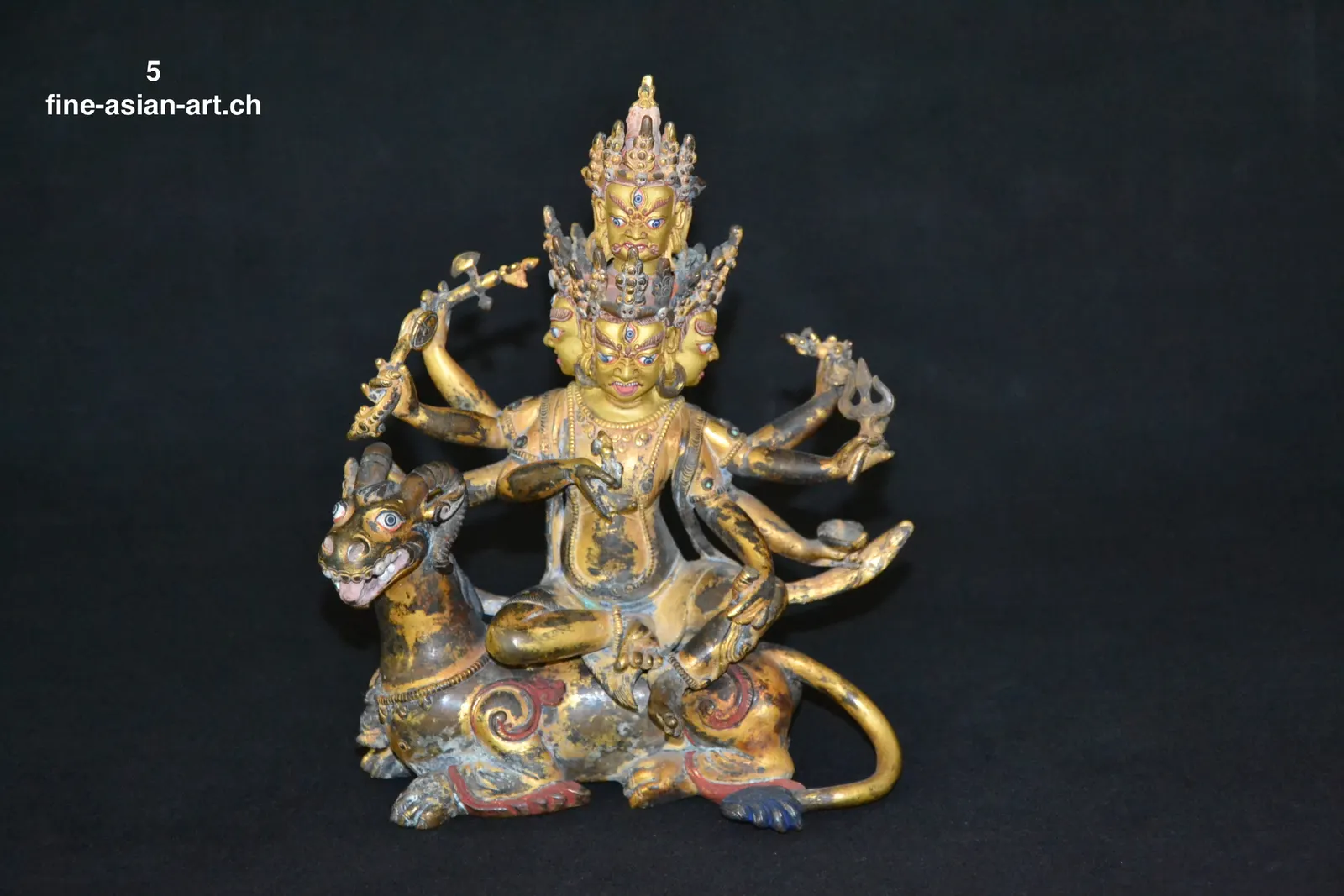
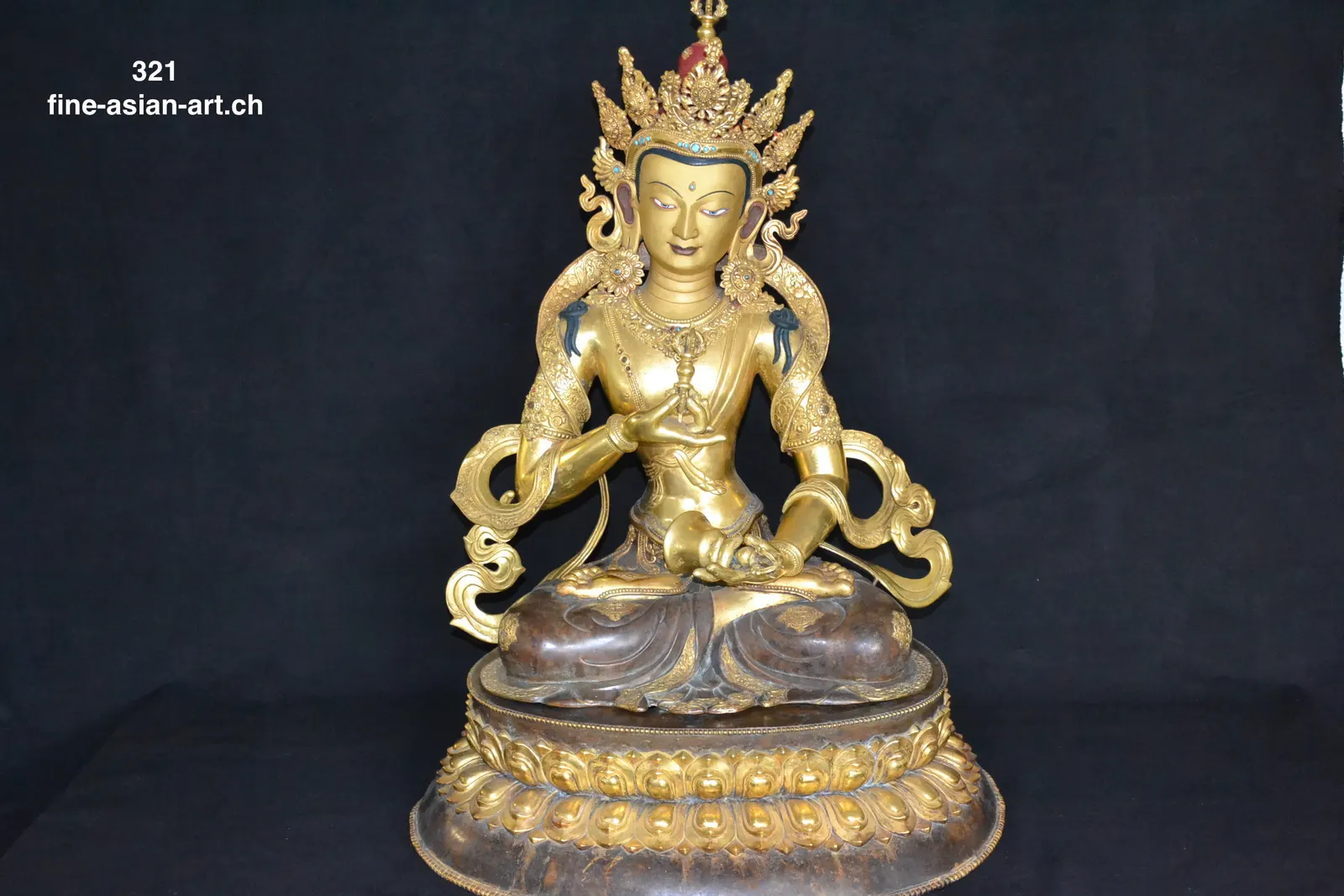
Do not polish gilded surfaces. Fire-gilding on copper alloy is thin, and the warm, worn patina is part of a piece’s history and value. Many Tibetan statues also have faces painted with cold gold (gold paste) and pigment for the hair, eyes and lips, often renewed as an act of devotion; leave these untouched.
Many statues have a sealed base containing consecration materials (zung) such as rolled mantras, relics or grains, often closed with a copper plate engraved with a double vajra. Do not open it: an intact seal matters to practitioners and often to collectors, and opening it can damage the base.
What about tarnished silver and amulet boxes?
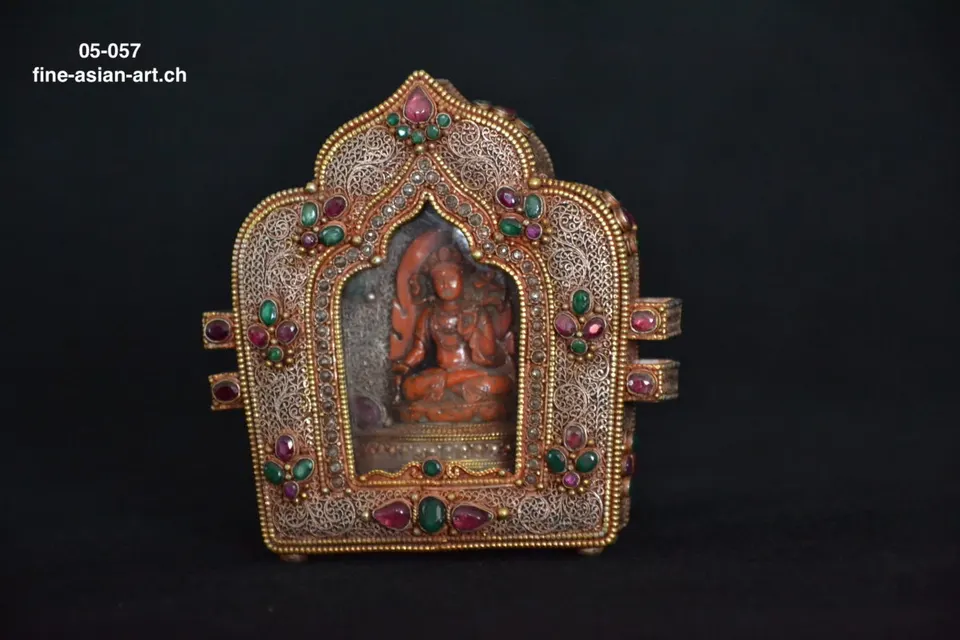
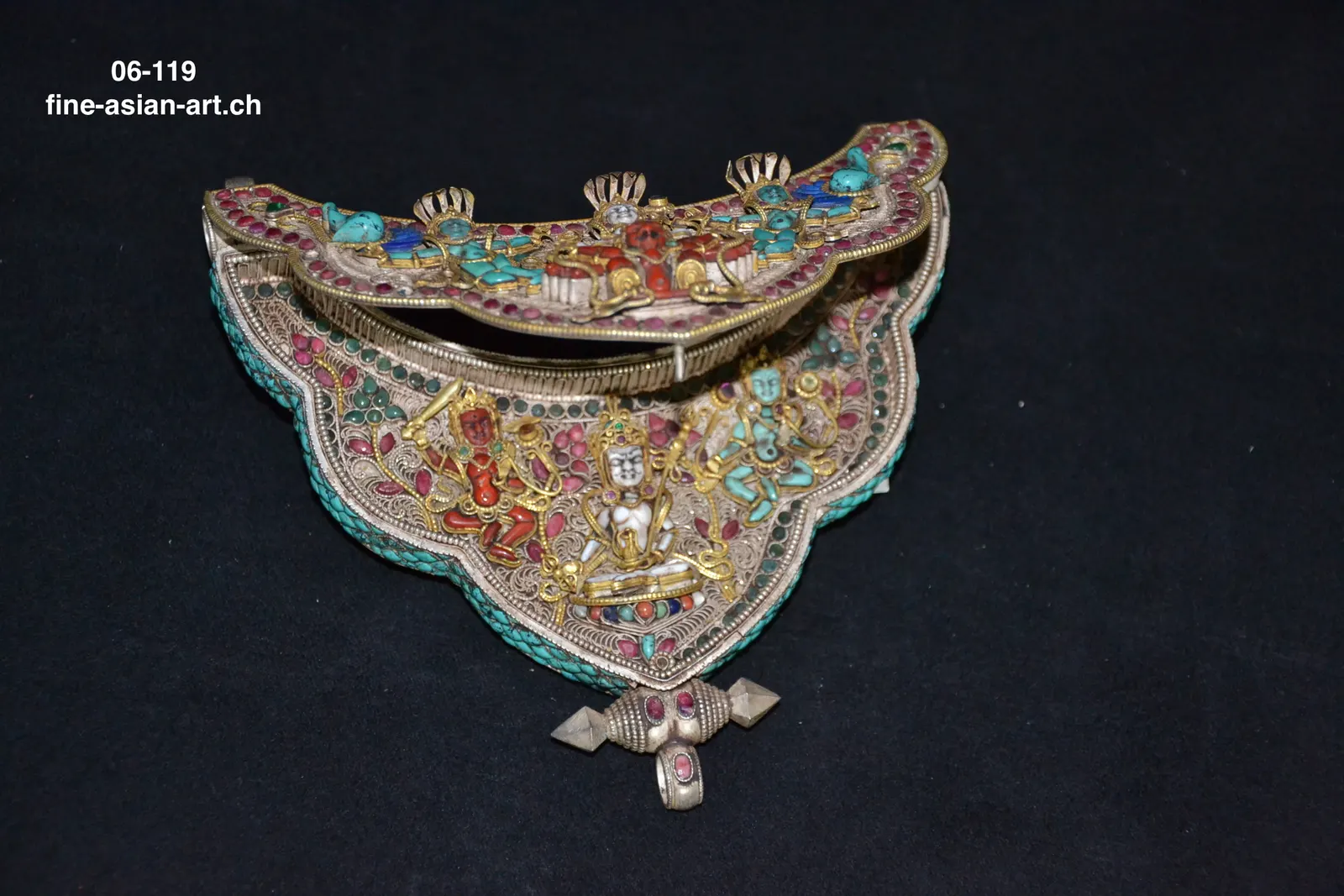
Be conservative. Silver, including the silver on many gau amulet boxes, naturally darkens, and a soft, even tarnish is generally considered acceptable or even desirable on old pieces. Abrasive polishes remove metal and wear down fine repoussé and filigree.
If tarnish really bothers you, a gentle dusting and a dry, soft cloth are the limit of what you should do yourself. Anything more, especially on pieces set with turquoise, coral or other stones that can be damaged by moisture or chemicals, is a question for a conservator.
Do not open sealed amulet boxes or remove their contents; like statue bases, they may hold consecrated items.
How should I care for and store a thangka?
Thangkas are painted on prepared cotton with mineral and organic pigments and mounted in silk brocade, so they are sensitive to light, humidity and handling. Hang them away from direct sunlight and strong spotlights, which fade pigments and weaken silk; many owners rotate pieces or use UV-filtering glazing.
Aim for stable conditions rather than perfect numbers: moderate temperature and relative humidity, without rapid swings. Avoid outside walls, radiators, fireplaces, air-conditioning vents, kitchens and bathrooms, since fluctuations can make the paint layer crack and flake.
To store, roll loosely, image side out or as advised by a conservator, around a wide tube padded with acid-free tissue, and interleave tissue so the surface does not rub. Never fold a thangka: creases crack the paint permanently.
Keep the silk veil and ribbons; they are part of the traditional mounting and protect the painting. When hanging, let the thangka hang freely from its top rod, check the hook can take the weight, and avoid pinning or taping through the fabric.
How do I protect against insects and mould?
Textiles, wood and organic glues attract clothes moths, carpet beetles and silverfish, while damp encourages mould. Inspect thangkas and wooden pieces a few times a year, especially the backs and folds of the mounting, looking for holes, fine dust, larval cases or fuzzy spots.
Prevention is mostly good housekeeping: keep rooms clean, ventilated and not damp, and do not store pieces in basements, attics or sealed plastic bags. If you find active pests or mould, isolate the piece in a clean bag and contact a conservator rather than using sprays or freezing it yourself.
How should I display Buddhist art respectfully and safely?
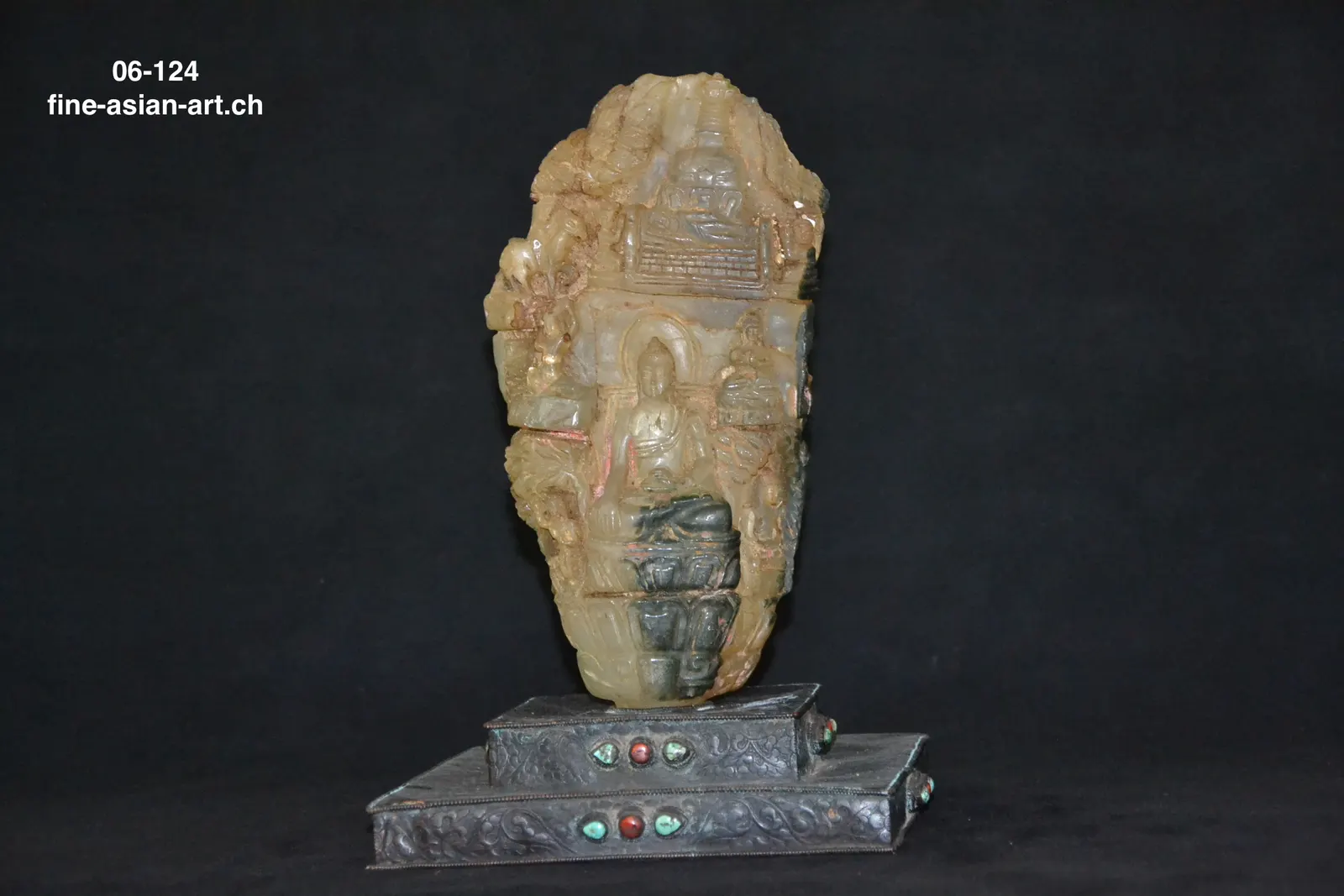
Many Buddhists follow traditional customs that collectors often choose to respect. Images of the Buddha and deities are commonly placed elevated, at or above eye level, and not on the floor, nor in bathrooms or next to shoes.
These are customs, not rules, and practices vary between traditions and households. Displaying a piece with care and a clear space around it tends to suit both the object and its religious meaning, whatever your own beliefs.
Most damage at home comes from knocks and falls. Place statues on stable, level shelves away from busy walkways, doors and the edges of furniture, and out of reach of children and pets.
A small amount of museum wax or museum putty under the base helps anchor a piece against vibration, minor bumps and earthquakes. Test it first on an inconspicuous spot and avoid using it on fragile or flaking surfaces. Tall or top-heavy figures may need a discreet custom mount.
How should Himalayan art be packed and shipped?
Wrap each object in acid-free tissue, then bubble wrap or foam, padding protruding parts such as hands and crowns. Use double boxing: a well-filled inner box floating in cushioning inside a stronger outer box, so nothing can move. Ship thangkas rolled on a wide tube, never folded.
Insure for the full value and choose a carrier experienced with art. Keep documentation ready, such as an invoice, photographs and a description, since customs authorities may ask for it.
Pieces containing ivory, coral, tortoiseshell or other protected materials may fall under CITES and national wildlife and cultural-property laws, even when old. Rules differ between countries and change over time, so check current requirements with the authorities of every country involved before shipping.
When should I call a professional conservator?
Consult a conservator for anything beyond dusting: flaking paint, tears or mould on a thangka, corrosion (especially powdery green spots on bronze), loose parts, stones coming away or any repair. Well-meant home repairs with glue or polish are often hard or impossible to reverse.
Look for a conservator who specialises in metals, paintings or textiles, ideally one who has worked with Asian objects. A good conservator will explain options and prefer minimal, reversible treatment.
Questions and answers
Can I polish a gilded Buddha statue?
No. Polishing removes thin gilding and the patina that gives an old bronze its character; dusting with a soft brush is enough.
Should I open the sealed base of a Tibetan statue?
No. The base usually holds consecration materials, and keeping the seal intact respects the piece’s religious function and avoids damage.
How do I store a thangka I am not displaying?
Roll it loosely around a wide tube with acid-free tissue, keep the silk veil, and store it somewhere dry, dark and stable. Never fold it.
Is it disrespectful to put a Buddha statue on the floor?
Many Buddhists traditionally avoid it and place images elevated, away from bathrooms and shoes. It is a widely observed custom rather than a fixed rule.
Can I ship a piece that contains ivory or coral?
Possibly, but such materials may be subject to CITES and national rules. Check current requirements with the authorities of all countries involved before shipping.
Written by Fine Asian Art as general background. It is not an appraisal of any individual piece; ask us about a specific object.