How Nepalese Copper Buddha Statues Are Made: Lost-Wax to Gilding
A Nepalese copper Buddha is made by lost-wax casting, then chased by hand, fire-gilded, painted and set with stones. This guide follows each stage as Valentin Rüst documented it in workshops in the Kathmandu Valley in October 2006, and explains what it tells a buyer looking at a statue today.
Field research and photographs by Valentin Rüst, Kathmandu Valley, October 2006, for his Matura thesis at Kantonsschule Enge, Zurich.
Updated
Where does this account come from?
This guide is based on first-hand fieldwork. In October 2006 Valentin Rüst, Werner Ruest's son, travelled to the Kathmandu Valley, visited workshops and documented, step by step and with his own camera, how a Nepalese copper Buddha is made. The results became his Matura thesis at Kantonsschule Enge in Zurich. What follows describes what he saw in those particular workshops in 2006, not a rule for every workshop or every period.
The trip was organised by Werner Ruest, the collector behind Fine Asian Art, who dealt in Himalayan art in the 1970s and 1980s and sold in Europe. His old friend Amer Lal Shrestha of the Hotel Dynasty in Kathmandu hosted Valentin and opened doors. Master Kaji Ratna Shakya showed the making of a figure, gave Valentin several pieces at different stages and answered questions in an interview, and Manoj Raj Shakya, a chasing master leading his own team, explained the finishing work. Our sincere thanks go to all three.
Lost-wax casting has a long history in the Kathmandu Valley. It has been practised for many centuries by Newar craftsmen, above all by families of the Shakya caste in Patan, whose images were also traded to Tibet. Newari terms below are given as they were recorded in 2006; spellings in other sources may differ.
What is the wax model made of?
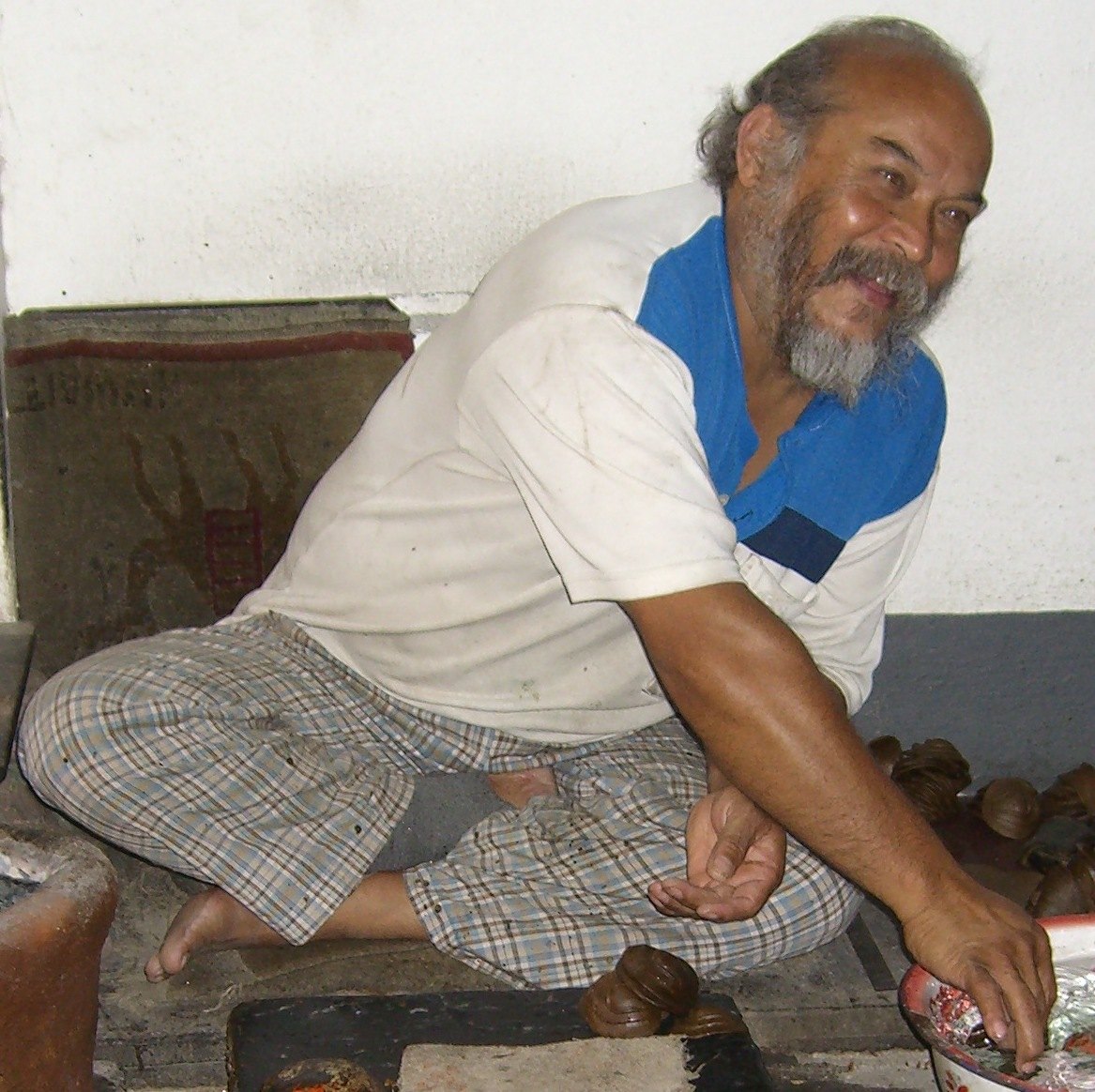
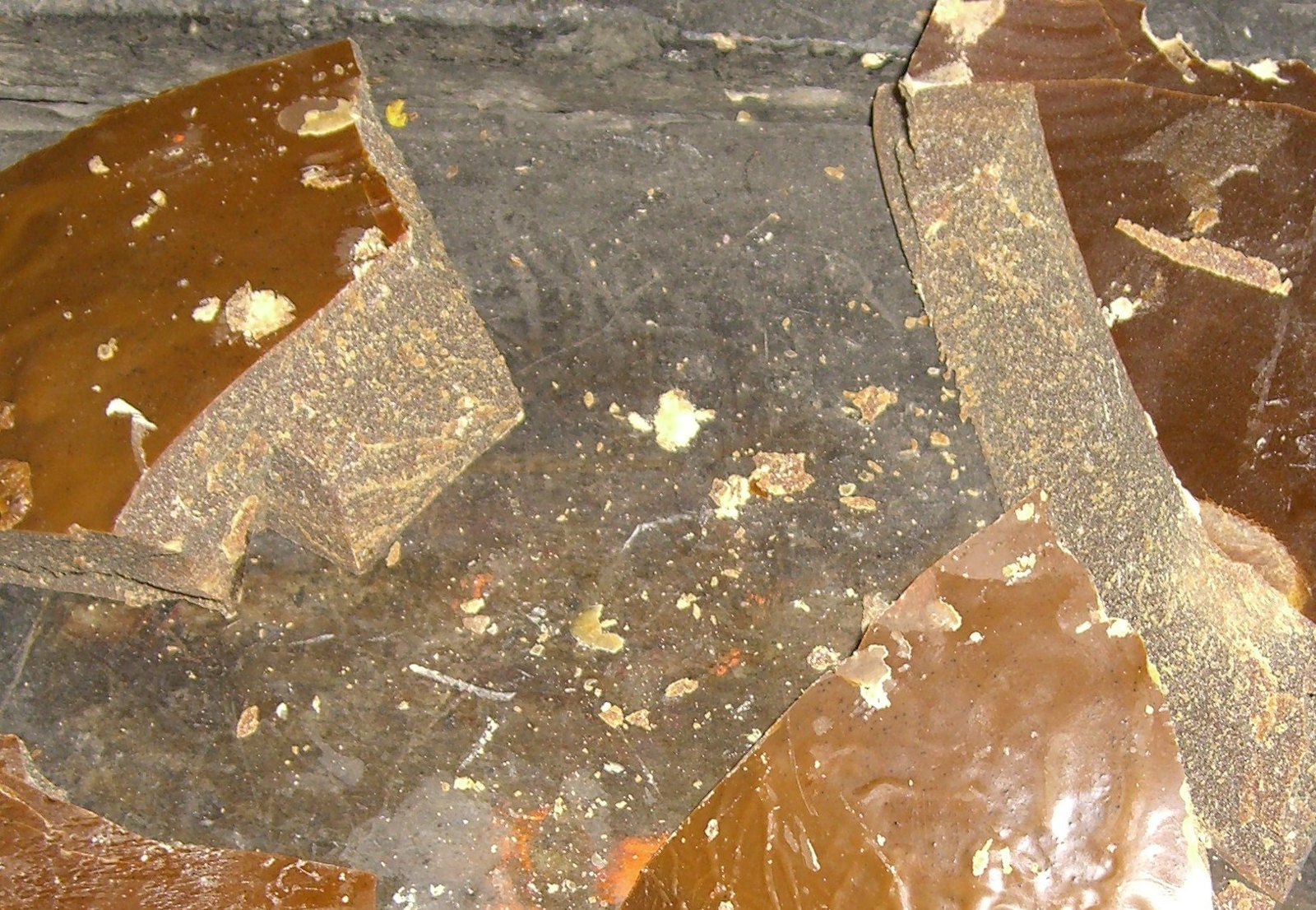
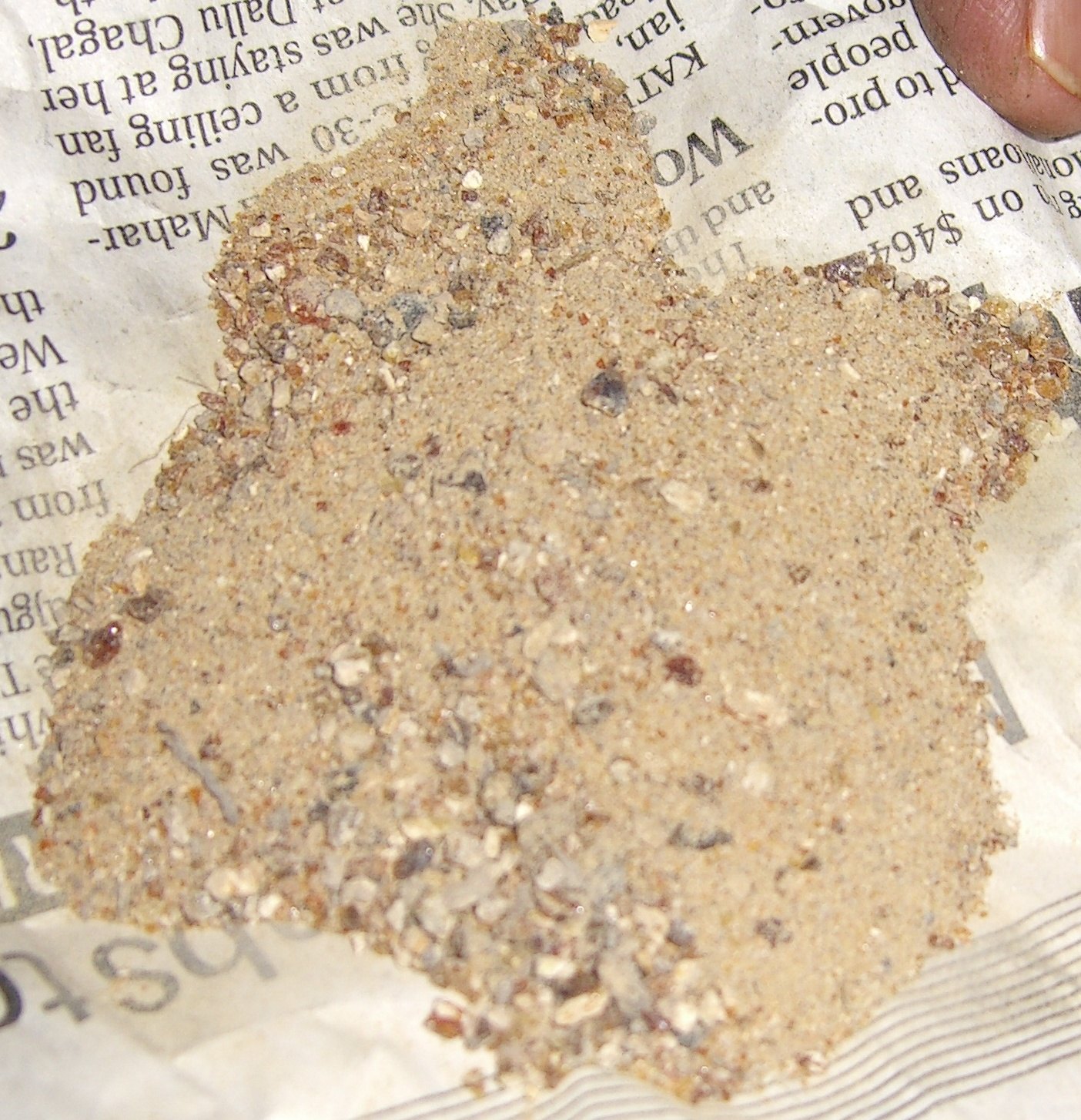
Every figure begins as a wax model that will later be replaced by metal. In the workshops Valentin visited, the wax was beeswax: emptied honeycombs melted into a mass and hardened into a large block. A powdered tree resin called sheela was added during melting; it makes the wax softer and more plastic, which is needed for modelling.
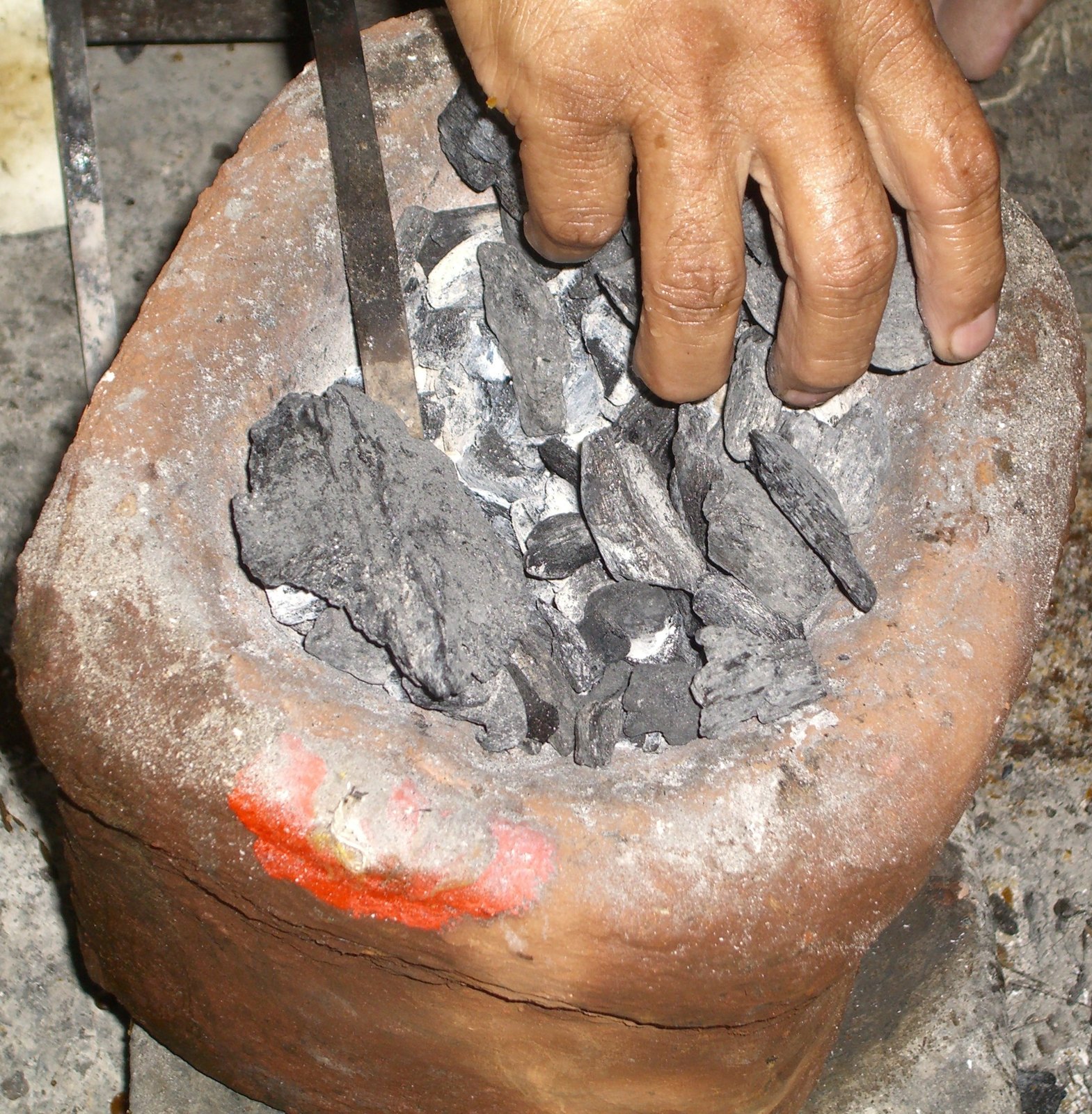
For use, the hardened block was warmed in a pot, either in the sun or over a small charcoal stove, and more sheela was added. Beeswax has been used for this purpose for a very long time, so the material itself has changed little.
How is the wax figure built up?
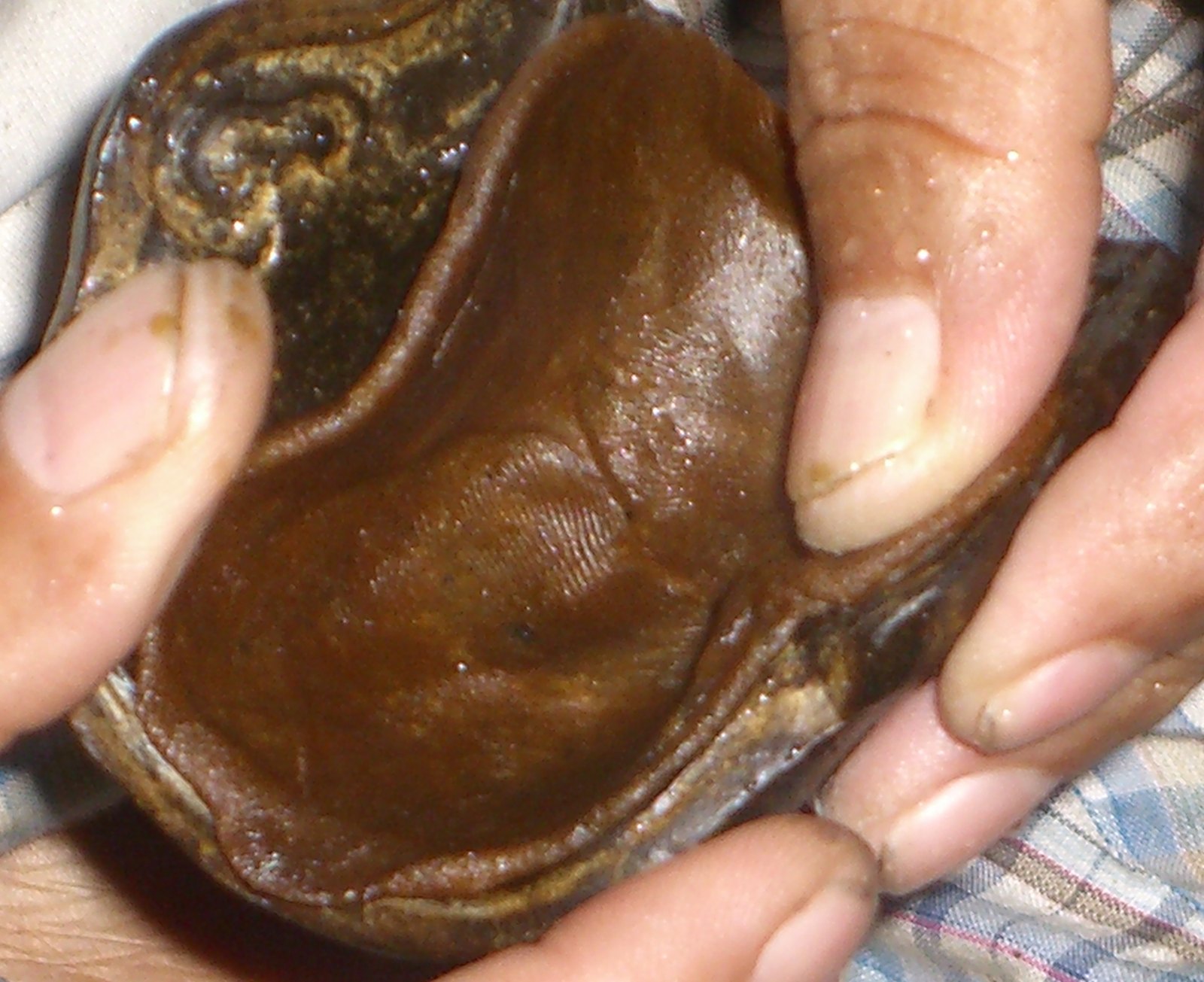
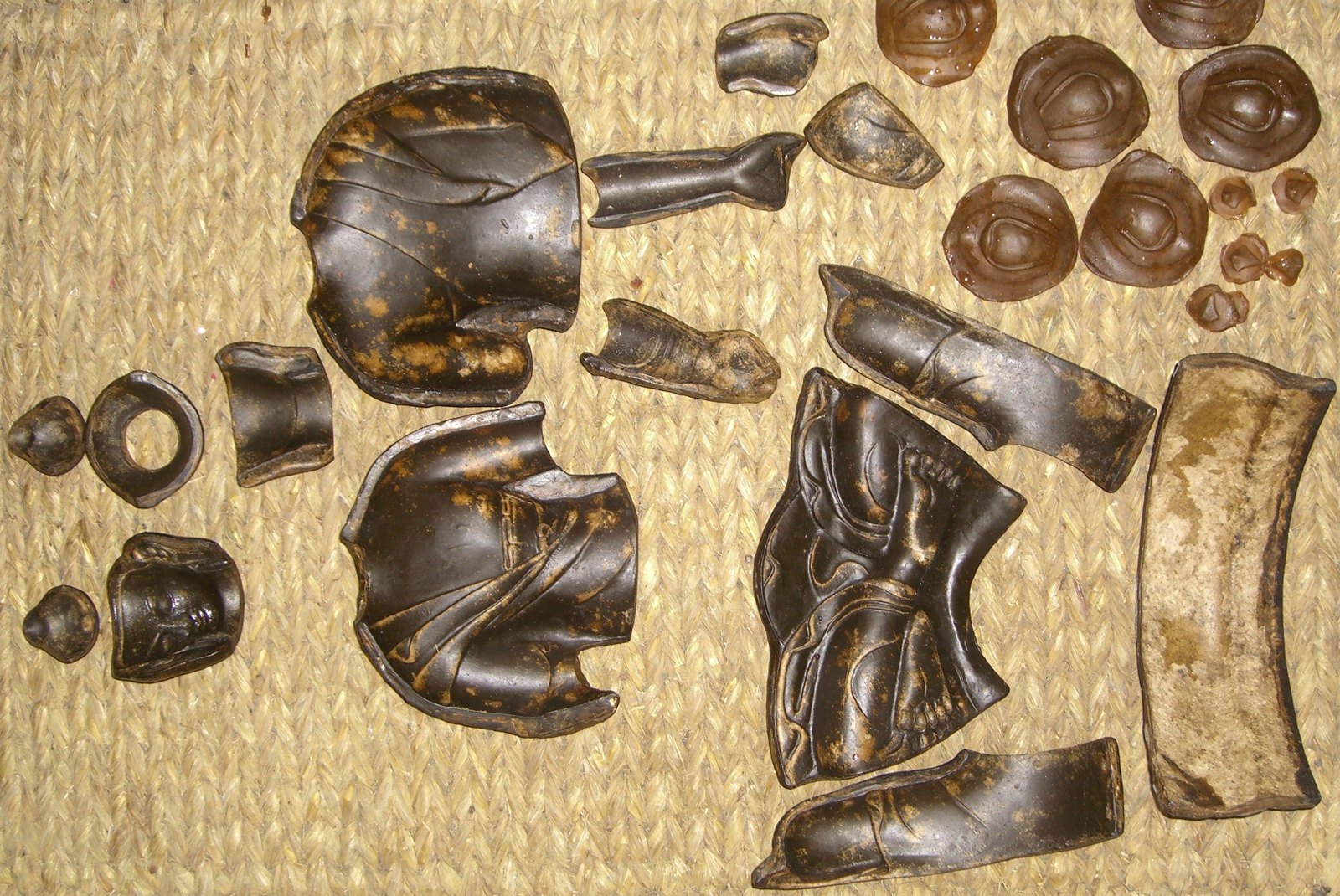
Rather than modelling each Buddha freely, the workshops pressed warm wax in layers into slightly moistened, water-cooled pattern moulds, today made of a special cement mixture and traditionally of metal. Once a thick layer had formed, it was lifted off and hardened in cool water. A single figure was made from roughly 250 to 300 separate wax pieces, of which around 100 were the hair curls alone.
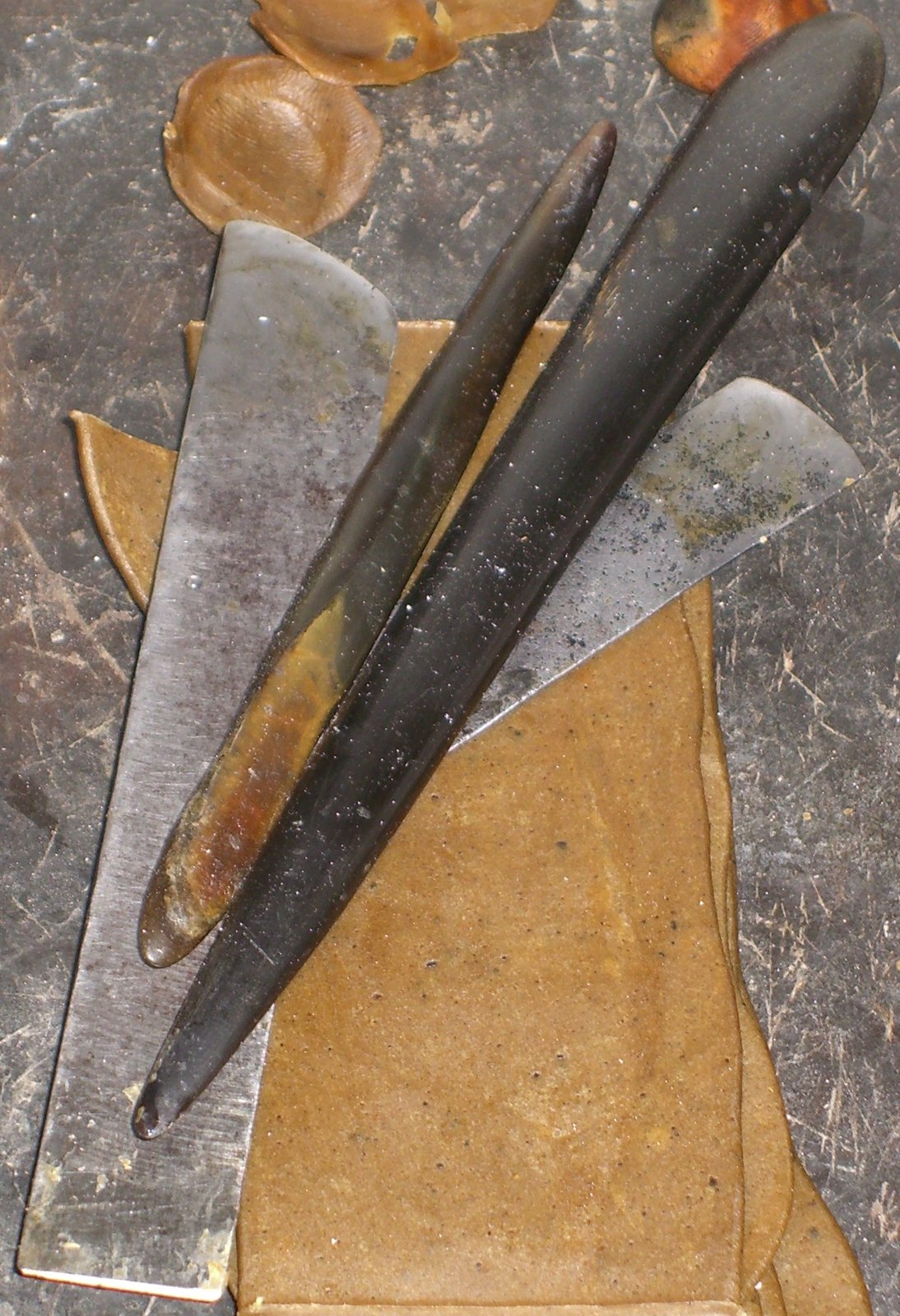
Each piece was then gently warmed over the charcoal stove and its details, eyes, nose, lips, brows, worked out by hand with small iron and buffalo-horn tools. The parts were joined by warming their edges. The upper part of the hair was made separately, because an opening at the head is needed for casting. Moulds explain why figures from one workshop can share proportions, but the quality of this hand detailing separates a fine figure from an ordinary one.
How is the wax prepared and encased in clay?
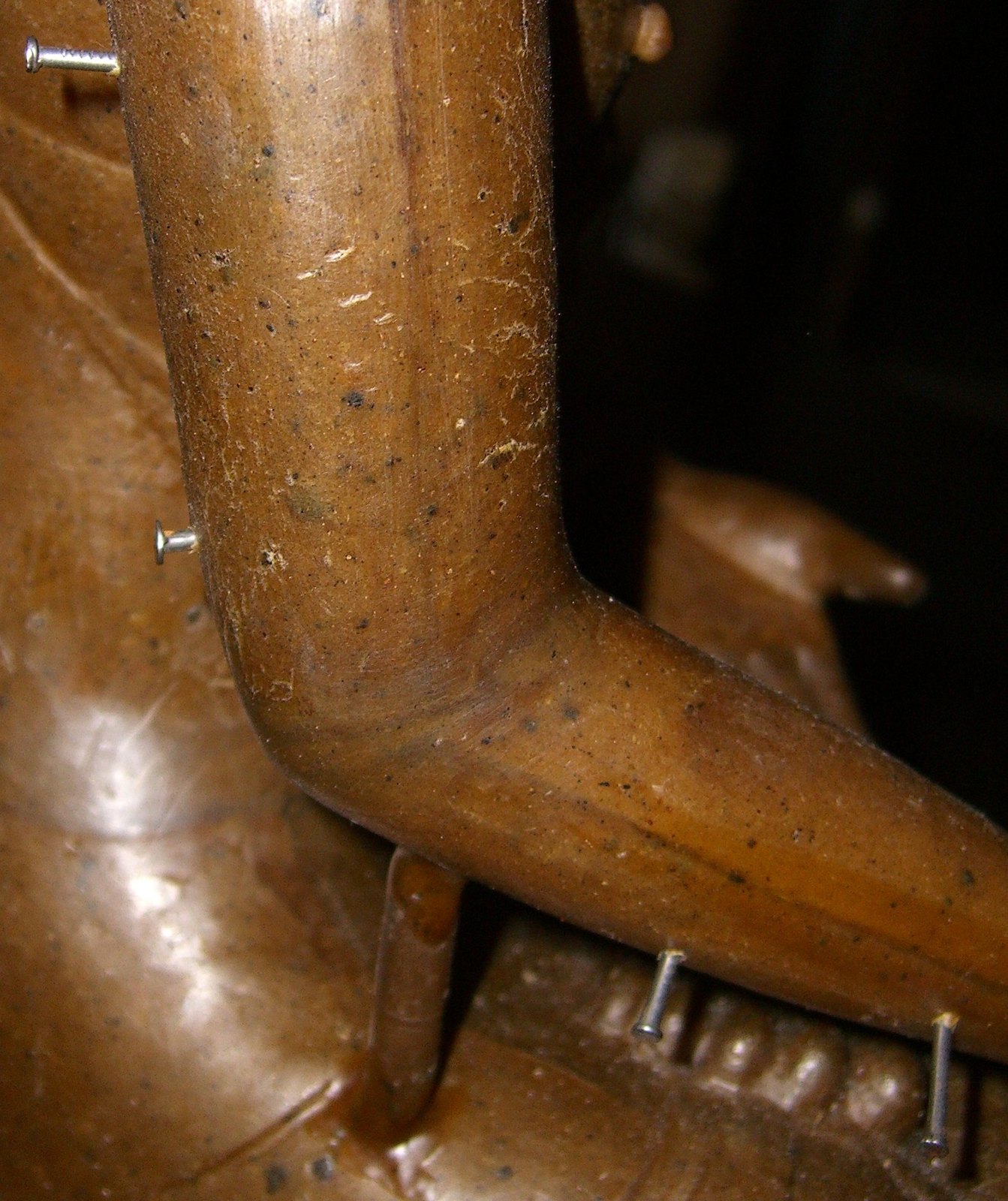
Once the wax figure was complete, nails were carefully driven into it at several points, for stability and so that the clay would adhere well.
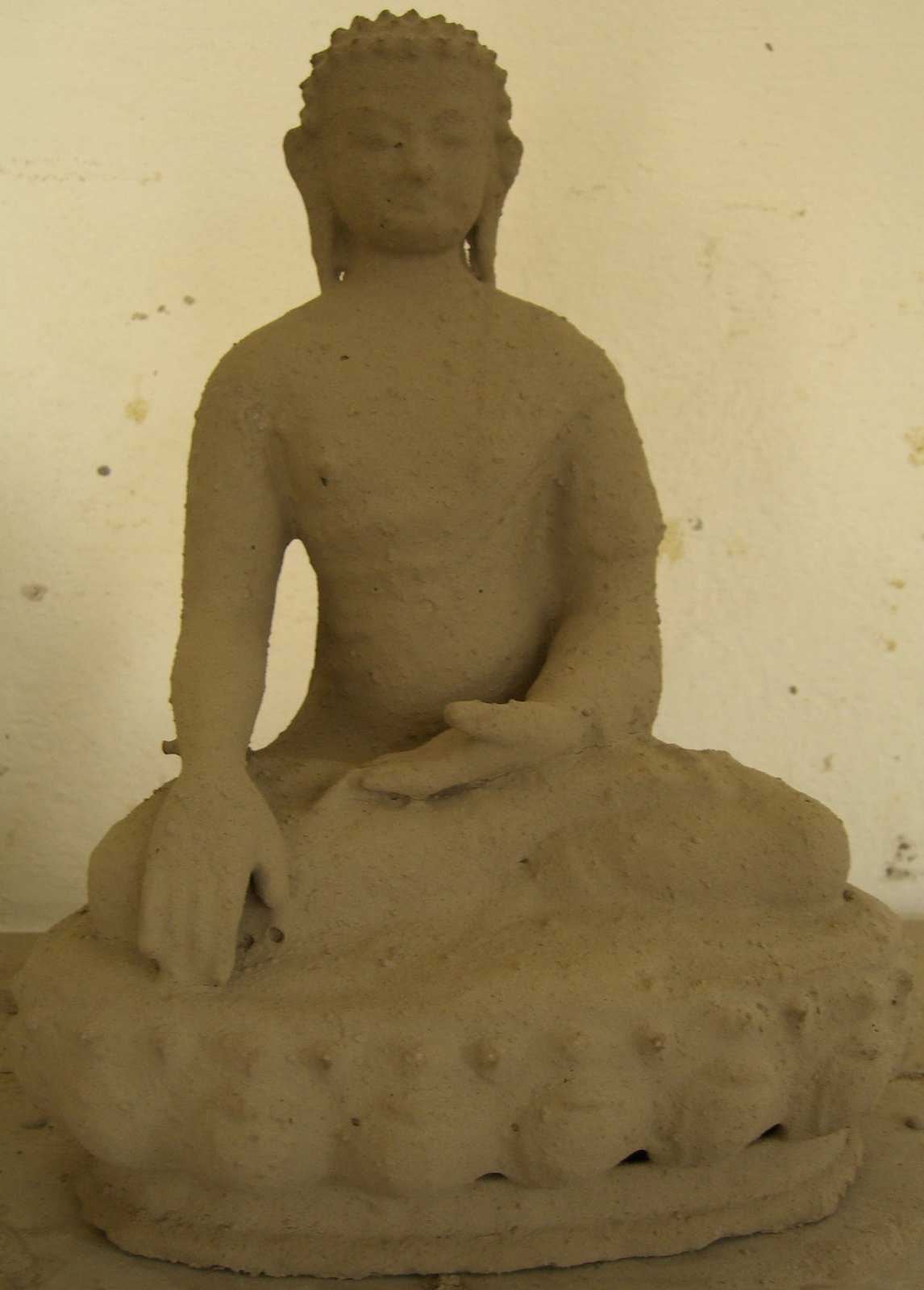
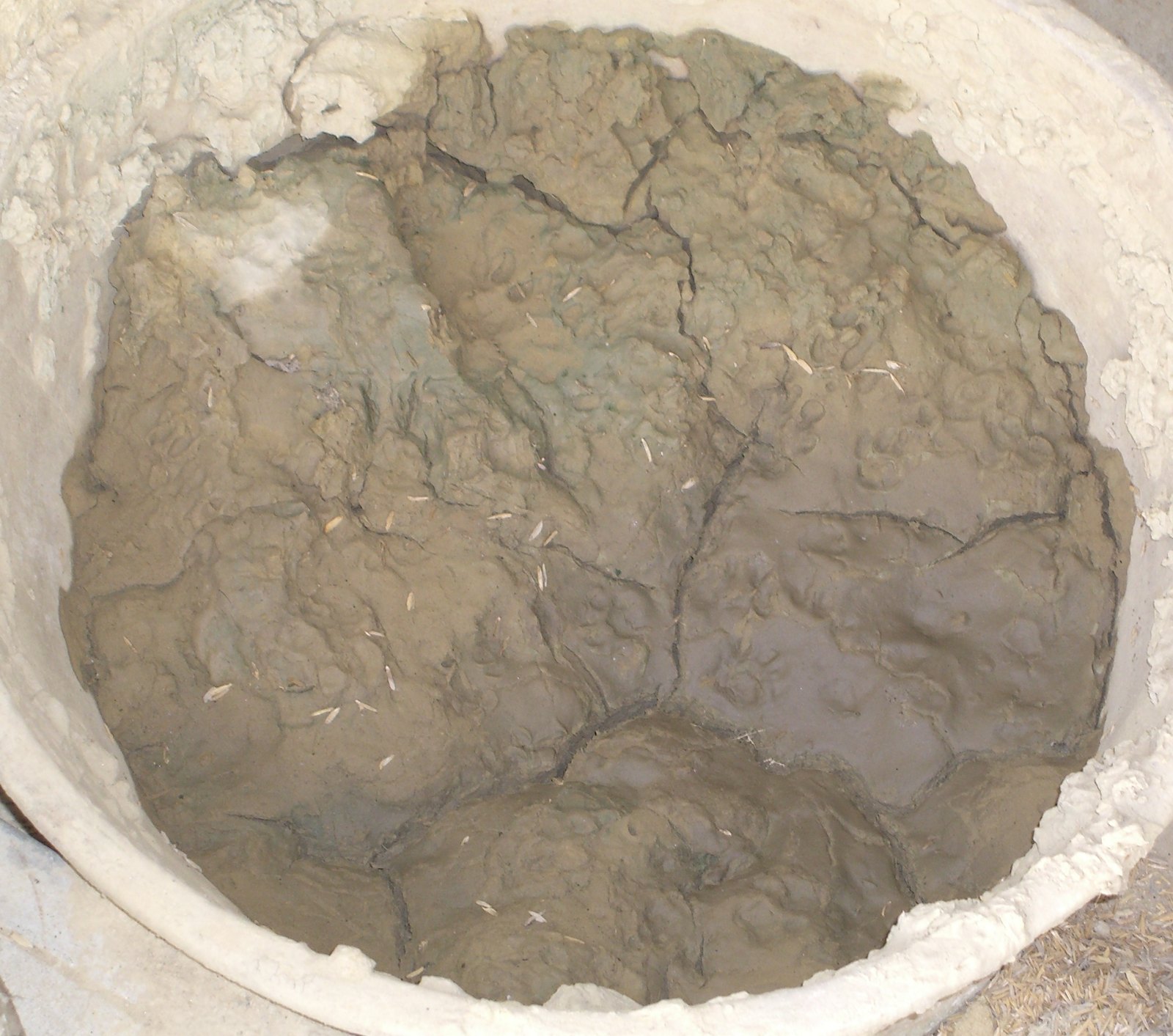
The wax was then covered in clay in two stages. First came michecha paag, fine brown mud mixed with cow dung and water; the dung refines the clay so the form comes out more beautifully. It was applied carefully and airtight, left to dry, and the process repeated three times.
Over this went cha bhunay guo, a yellowish, firmer clay mixed with hay and water, applied damp and dried, twice; the hay gives extra hold. At the end the figure can only roughly be made out, and despite the hollow inside the mould has become very heavy.
What happens on casting day?
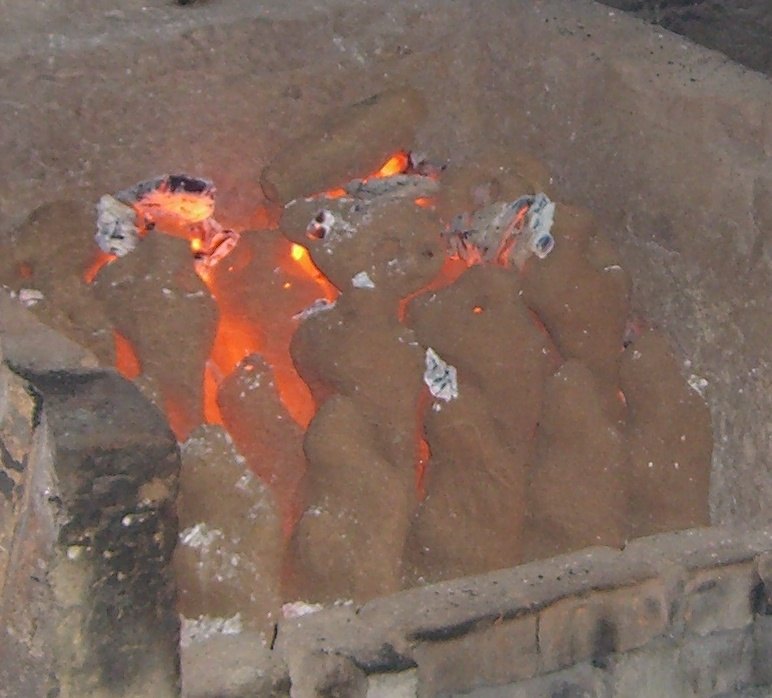
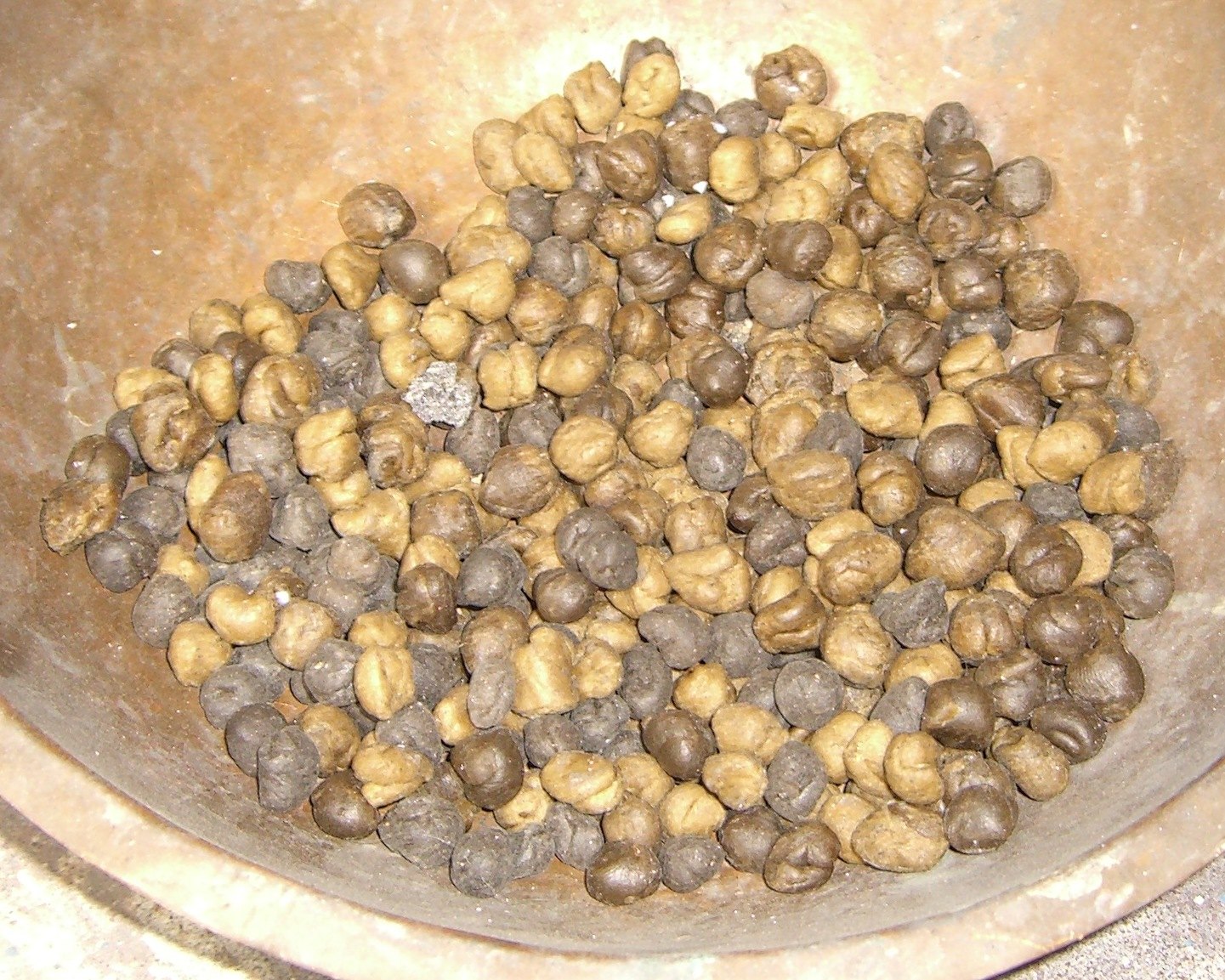
Casting, recorded as dhlay yaagu, is costly, so it took place rarely: the workshop waited until many moulds were ready. On average about 45 moulds were fired at once, using roughly 80 kg of copper, in poor air and breathing conditions. The moulds were set opening-down in a burnout kiln heated with wood and charcoal for about two hours, so that the wax ran out. They were then set on the ground and a helper carefully poured water over them to cool them slightly and drive out the gases inside, to avoid the mould exploding.
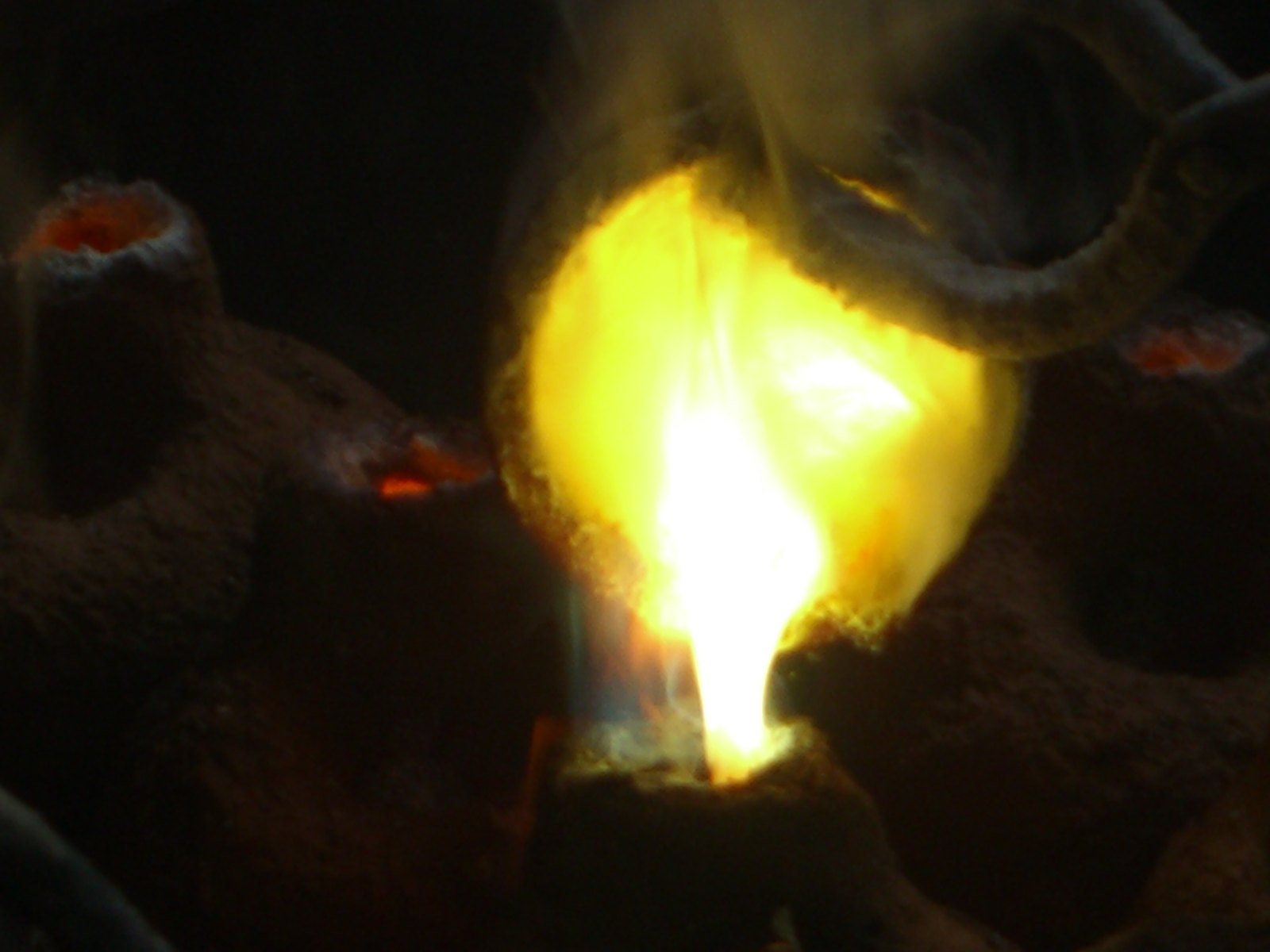
Placed opening-up beside the second furnace, the moulds were filled with pure copper, melted from rods or scrap such as broken copper pots. While pouring, small pieces of wax were added to the copper to make it flow more smoothly. The filled moulds were then thrown into a water basin to cool.
What does a figure look like straight from the mould?
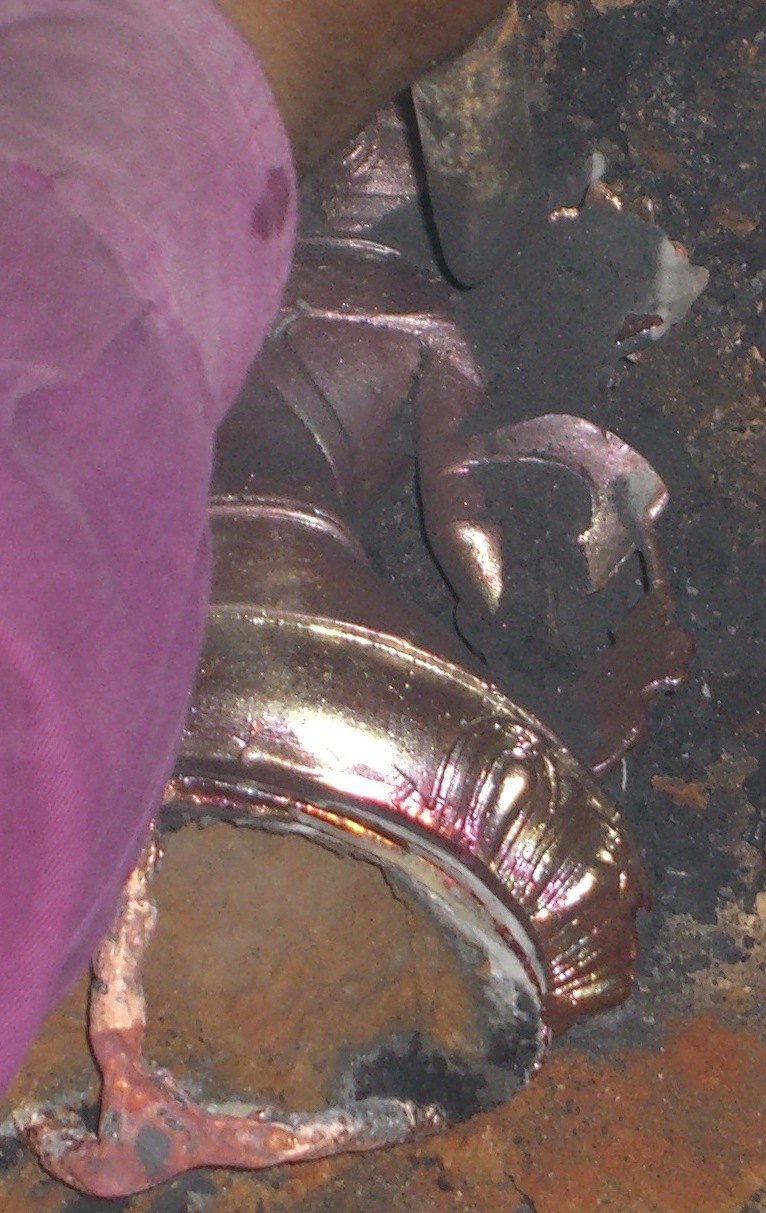
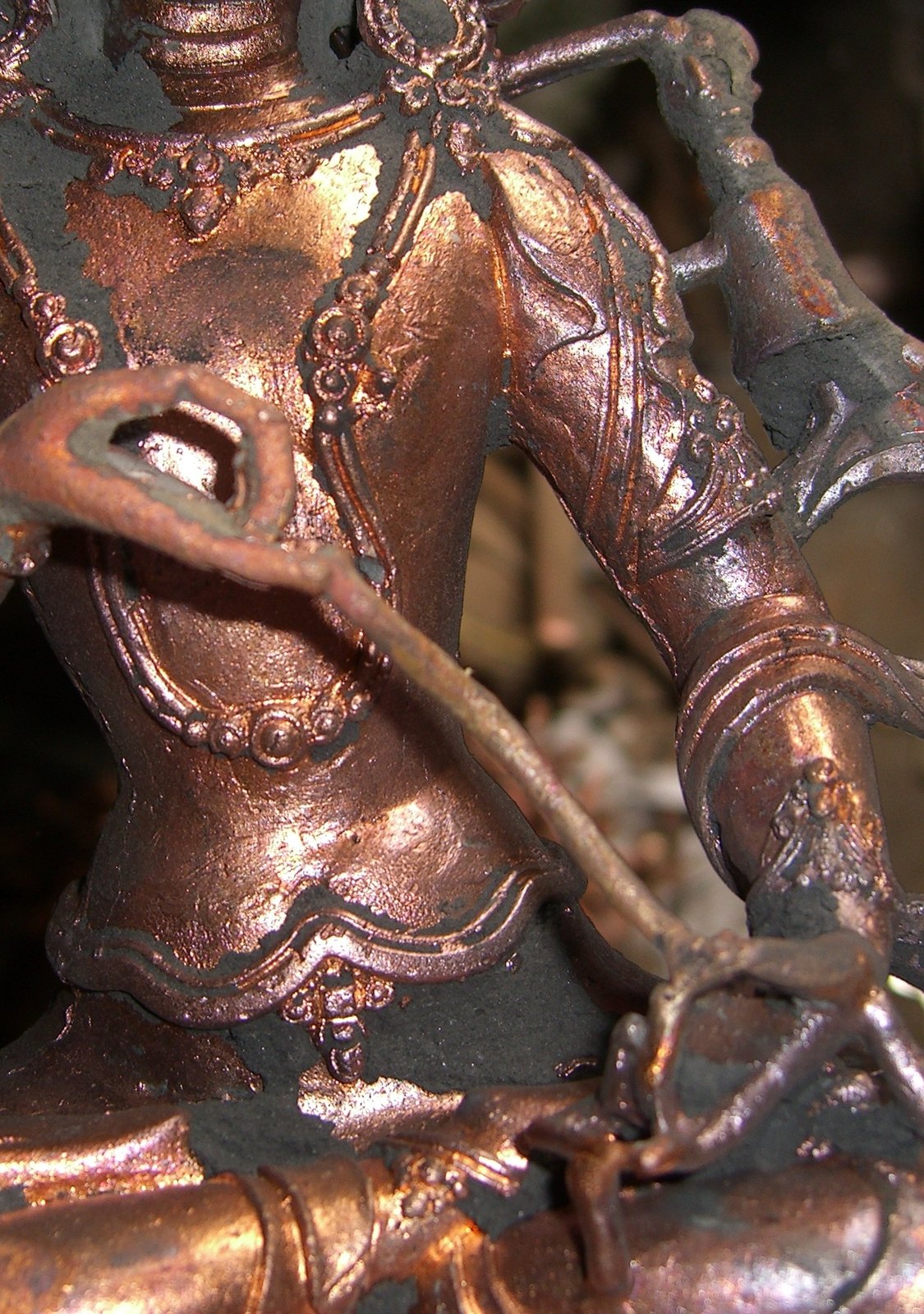
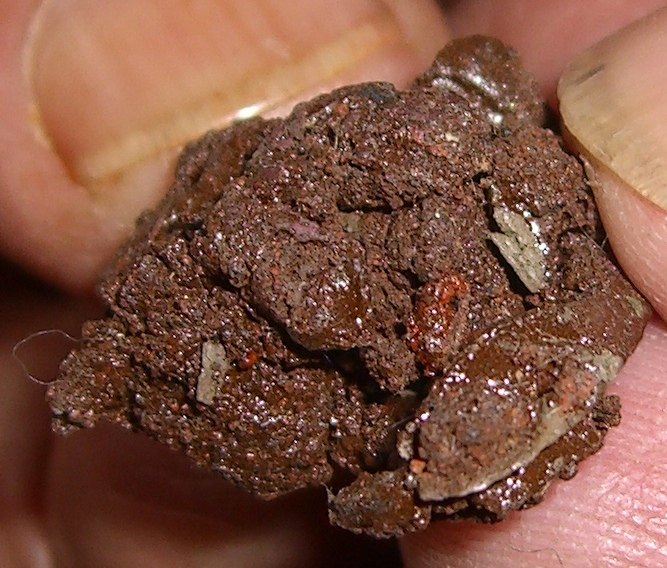
The cooled figures were taken out with tongs and the baked clay was smashed off with tools, so each mould serves only once. Parts cast attached on the outside, such as a weapon or ornament that belongs in the hands, and small metal rods supporting an arm then had to be removed. What emerges is the kora figure: still covered in clay and soot, with its pose and proportions but none of its final crispness.
Castings are often damaged: where heat could not escape, parts can burst and leave large cracks, which must be repaired. Seeing a kora shows collectors how much of what we admire in a finished statue is not created by casting at all but by the work that follows.
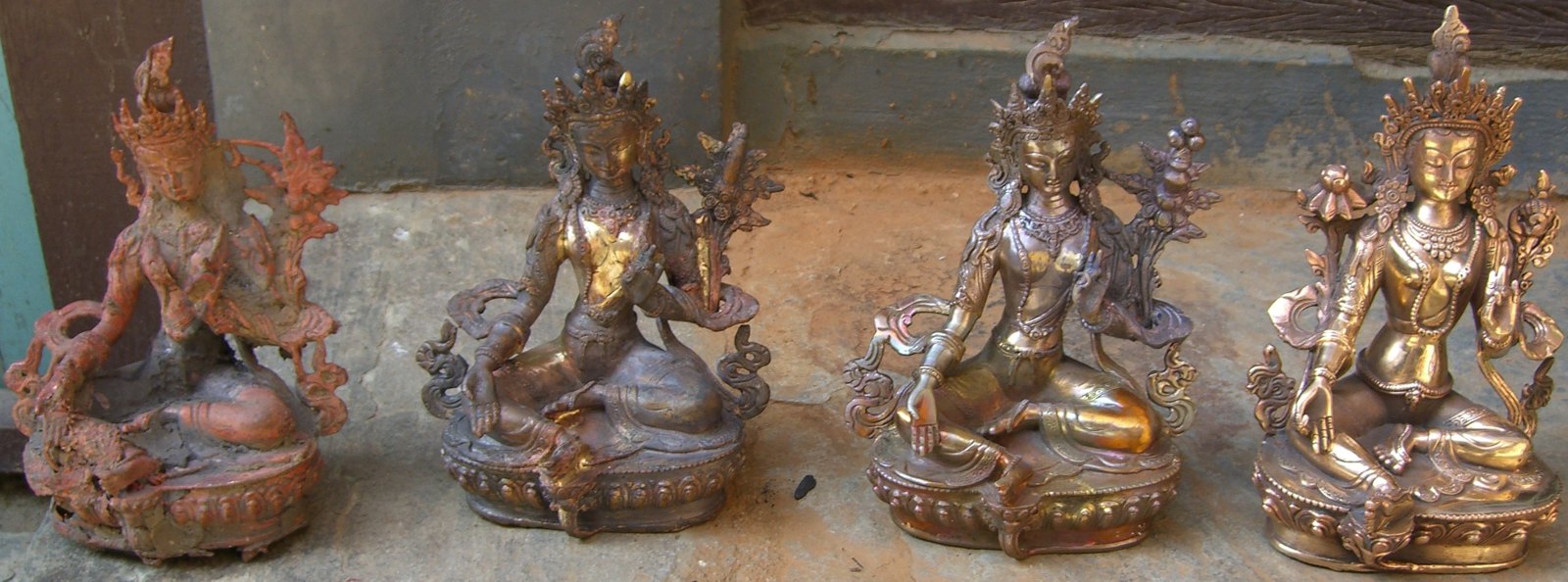
Kaji Ratna Shakya gave Valentin several pieces at different stages. A photograph of four copper figures side by side shows the finishing sequence clearly: damaged and full of mud, cleaned and repaired, chased, and finally sanded until it shines. It is a useful way to think when you look at any Himalayan metal figure, old or new.
What is chasing, and why does it take so long?
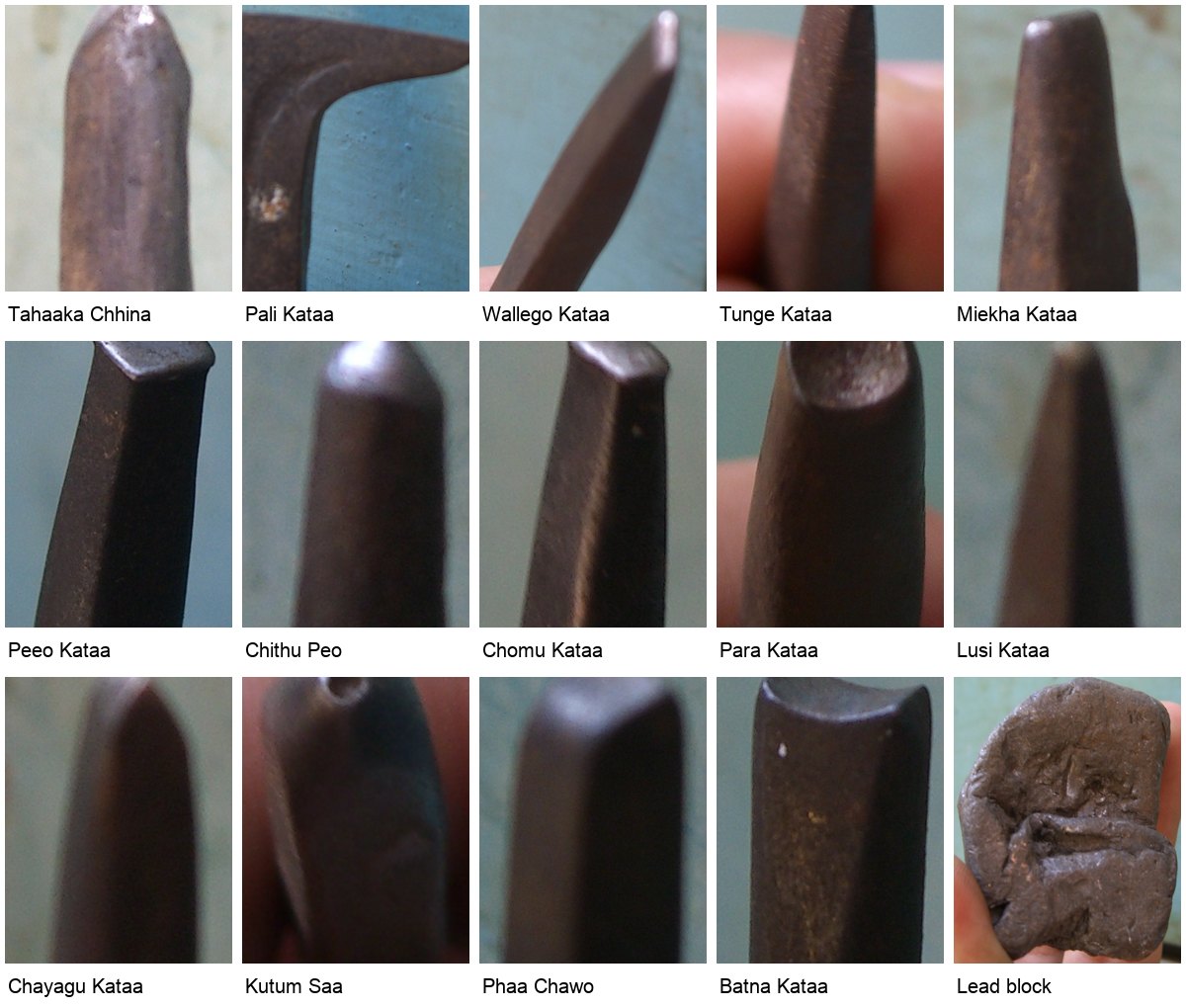
Chasing is the patient work of cleaning and defining the surface with iron punches, recorded as kataa, and a hammer, much like chiselling. Between 50 and 100 kataa were used for one figure, each for a particular part: eyes, nose, lips, fingernails, lotus petals. They removed baked-on clay and soot and also brought out the contours and details. A small anvil, files and a compass for checking proportions were also used.
During the work the figure was filled with wax again, later melted out over a fire. It fills the hollows, prevents deformation and damps vibration. In Manoj Raj Shakya's workshop (he is not related to Kaji Ratna Shakya), a small team does this work; for one man it takes about six months per figure.
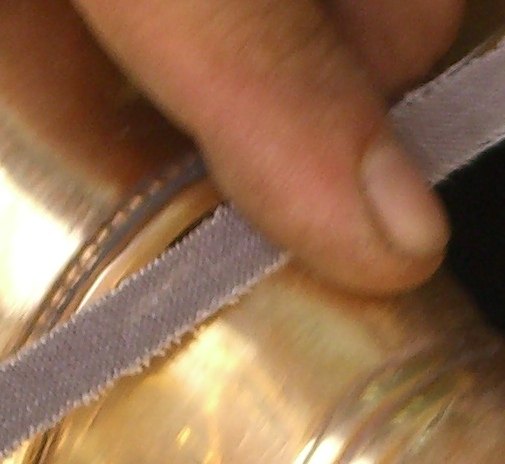
After chasing, the figure was carefully sanded with thin strips of sandpaper until it was smooth and began to shine, and finally polished with a mixture of wax and red clay.
How is fire gilding done and burnished?
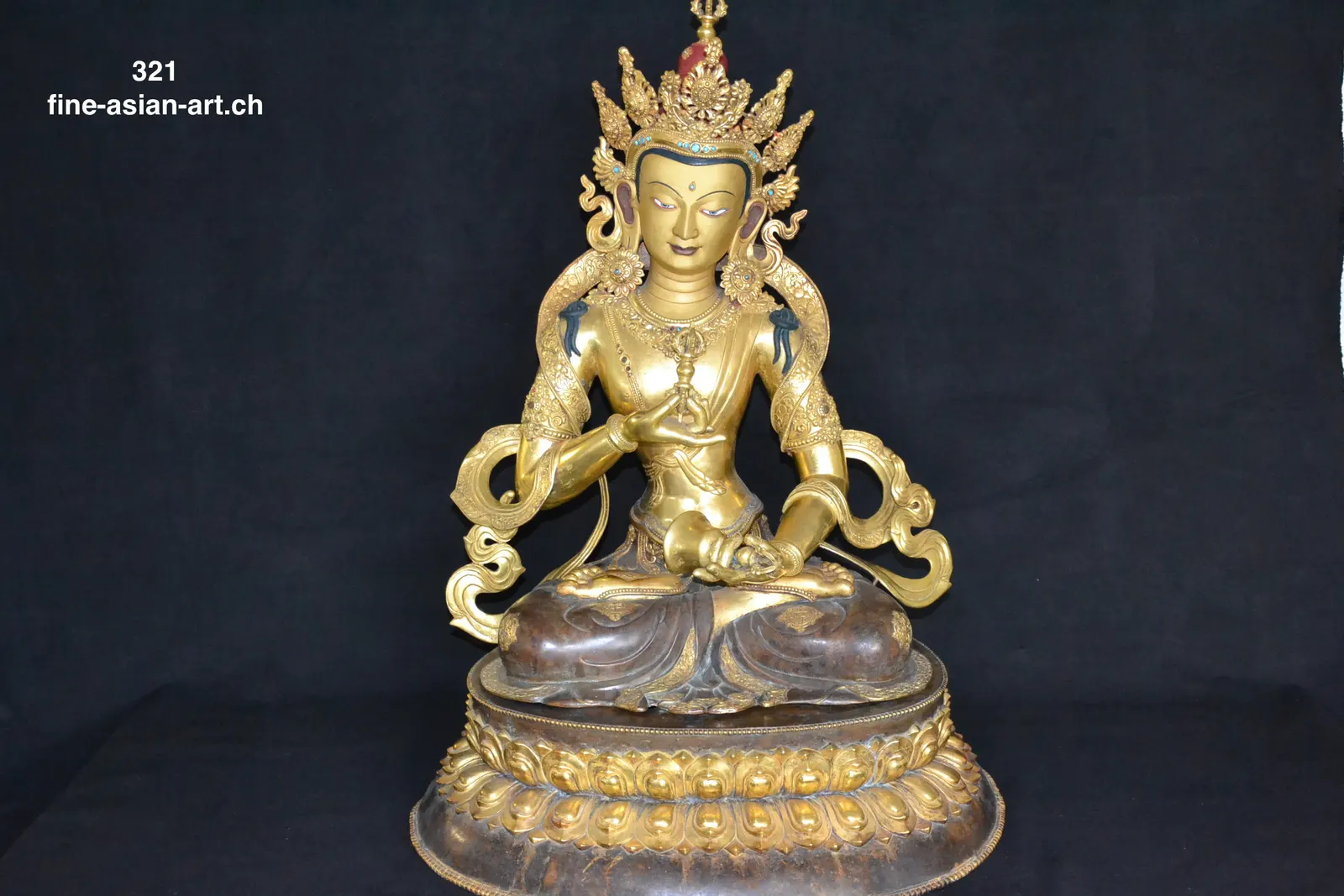
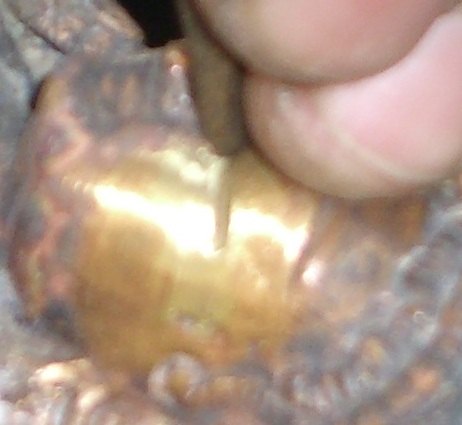
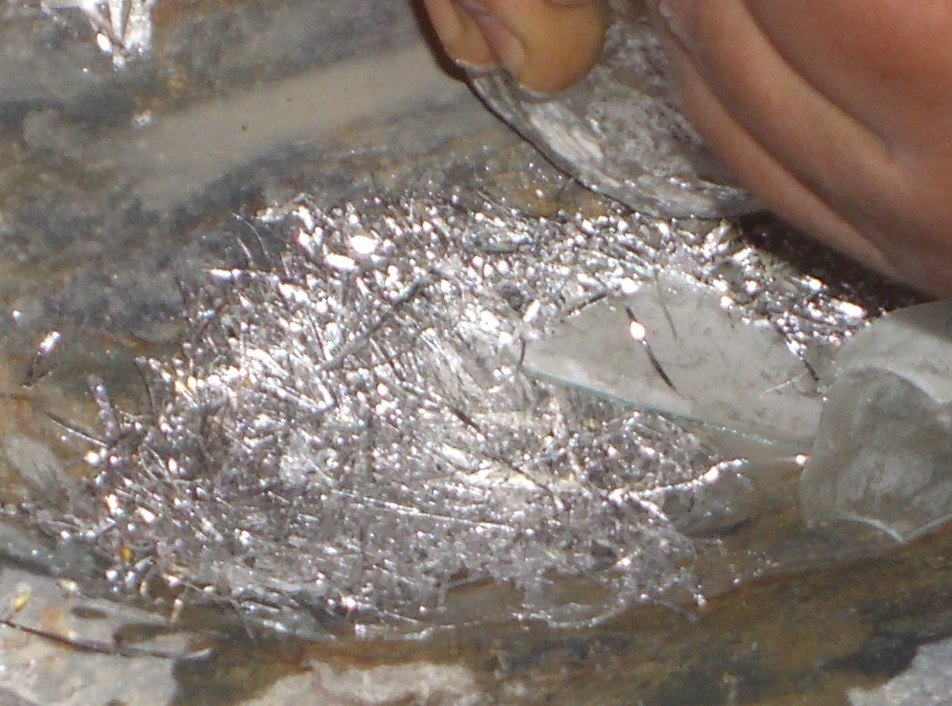
The gilding Valentin documented was fire gilding (mercury gilding). The figure was heated, today with a gas torch, and dipped into a sulphate solution so that the copper surface reacts and the amalgam will adhere; it was brushed to roughen the surface. Separately, 24-carat gold leaf was cut fine, weighed out with mercury and ground in a stone bowl with glass shards and water for about three and a half hours into a silvery mixture.
The amalgam was taken up with a brush, dipped into a nitrate solution for better adhesion and applied to the chosen areas; the face was not gilded at this stage. The coated areas look silver at first; only repeated heating with the torch turns them matt gold. Small flaws were touched up with a ball of wool, and the figure was cooled in water.
It must be said plainly: mercury fire gilding releases toxic mercury vapour. It is hazardous to the workers and their neighbours and is restricted or banned in many countries today. We describe it because it explains the look of traditional Himalayan gilding, not to recommend it.
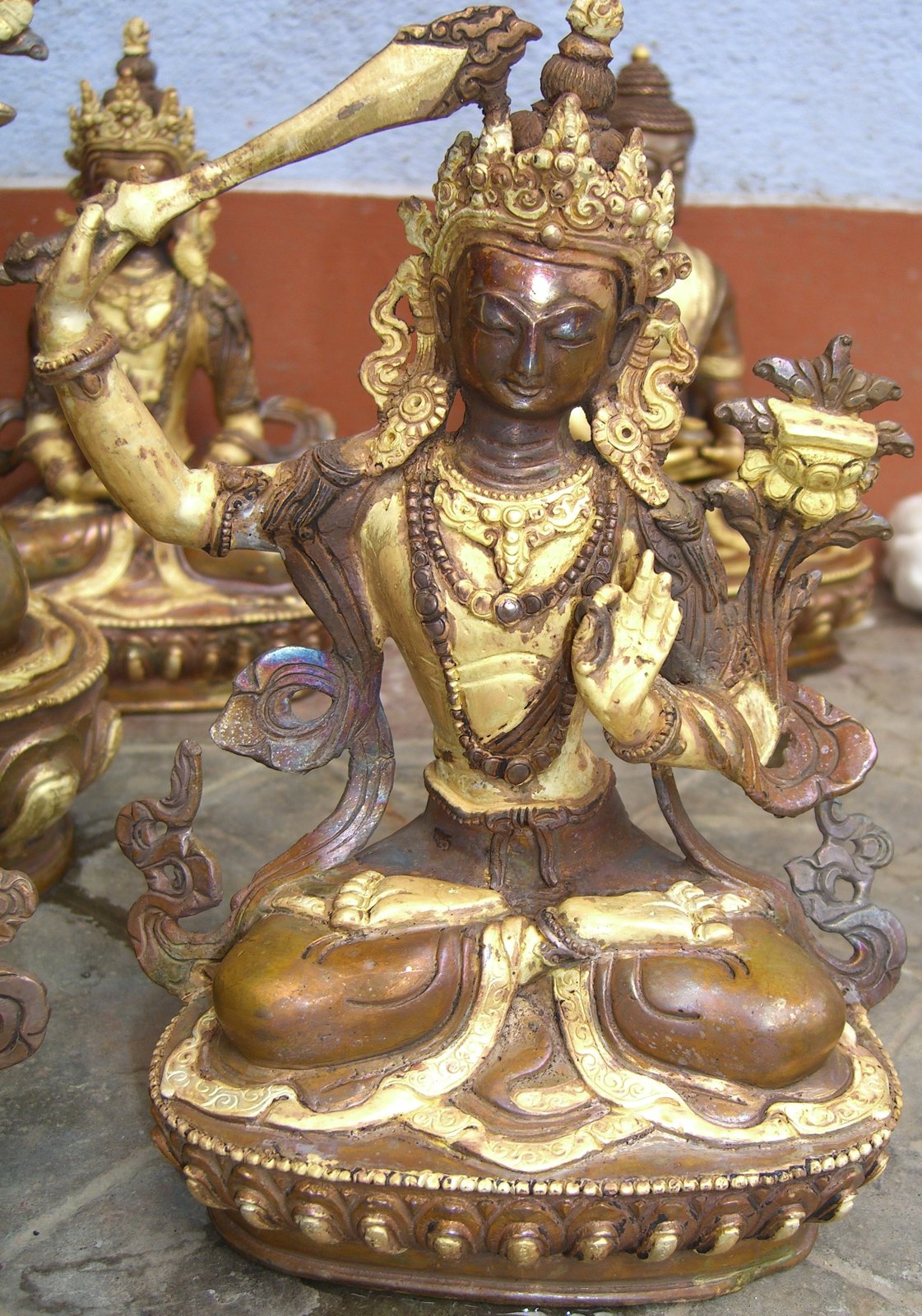
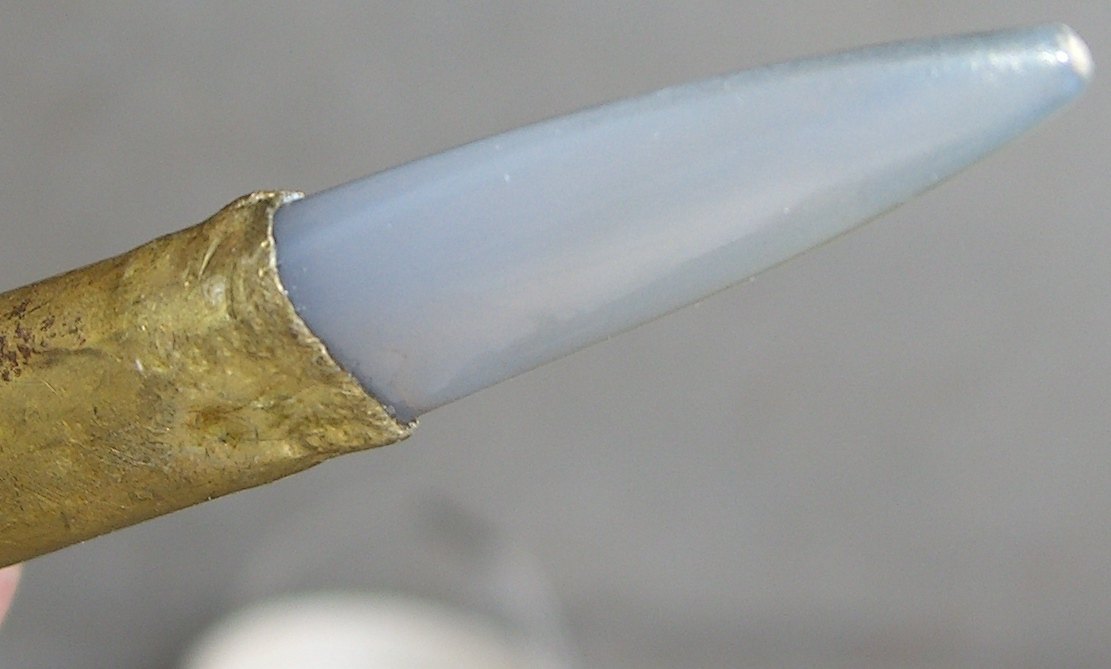
The gilded areas were then rubbed in water with hatha, a soap made from the seeds of a tree (soapnut), using an agate-tipped tool recorded as lasaa. This makes the matt gold bright, but leaves many small scratches, which were smoothed with a fine metal brush.
Next a red-brown mixture recorded as geyru was applied to the whole figure: the copper areas become darker and more even, the gold yellower and more striking. The figure was dried in the sun or, for speed, with the torch, polished again, and the open underside was closed with a fitting base plate.
How is the face painted?
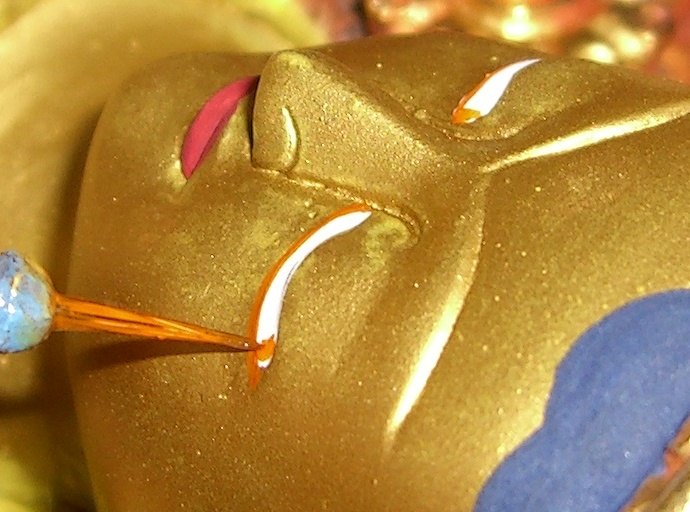
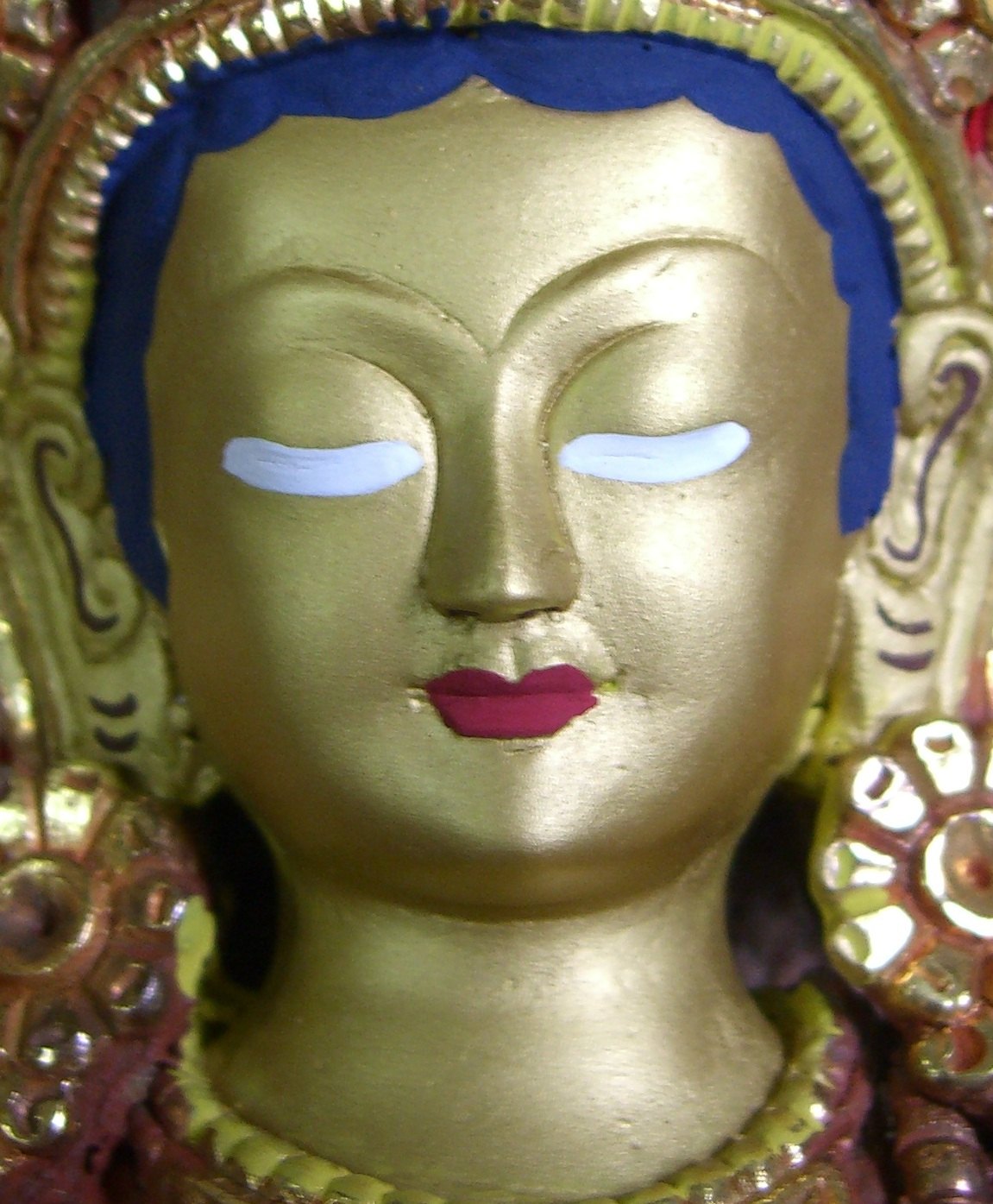
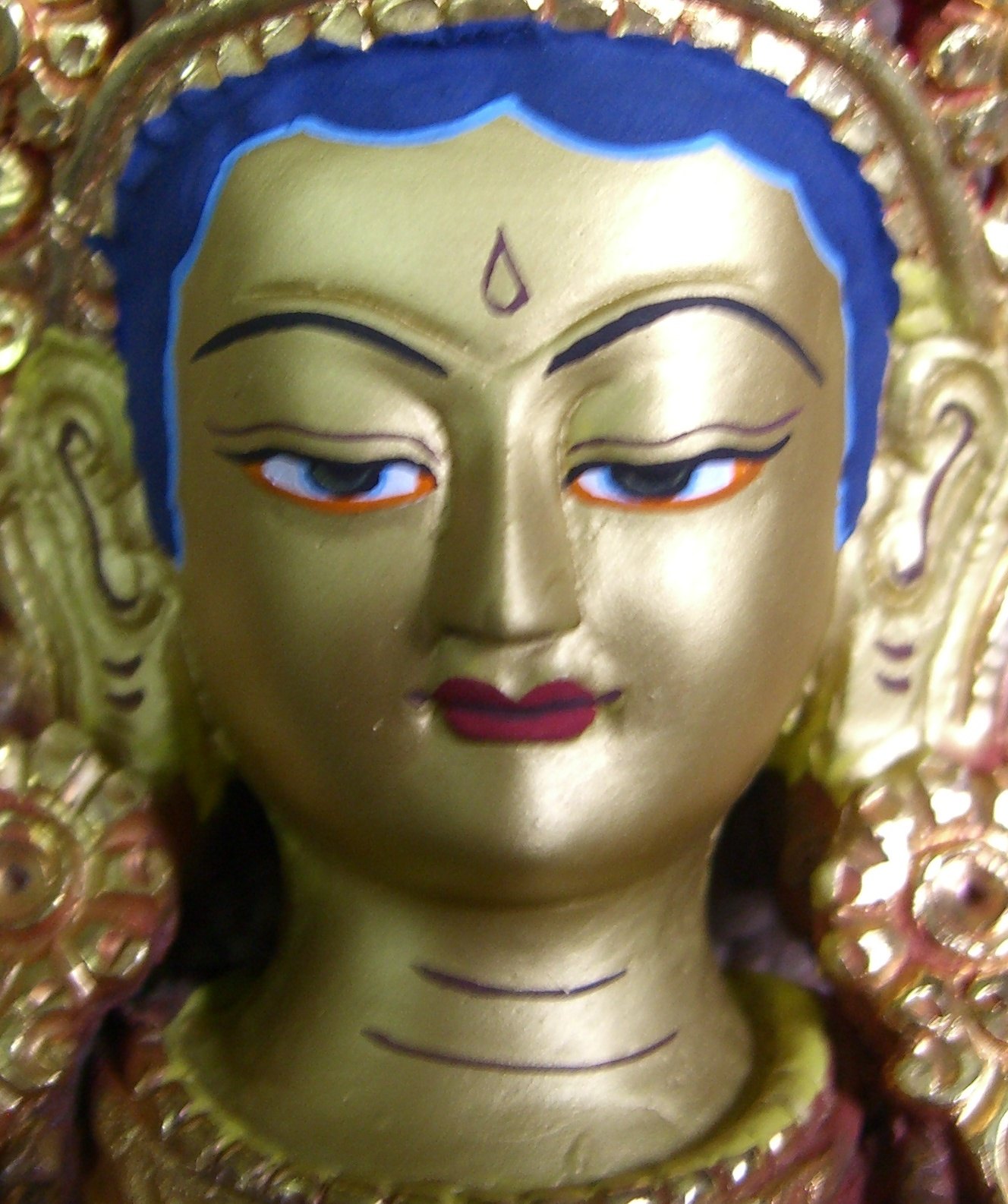
The face gives a figure its expression. Formerly stone pigments were used; today, for cost reasons, chemical paints. Painting one face took about three hours, with brushes of squirrel hair and other very fine hairs so that the gold does not stick to them, and a lasaa. The eye areas were often first corrected with a putty that hardens over time.
A yellow paint recorded as astra was applied three times, to save gold and fill the pores. Over it went 24-carat gold leaf mixed with water, in three coats, each of which can mean more than 100 brush strokes. Then the eyes were painted white and outlined in orange and black, with black brows and pupils, red lips outlined in brown, a light-blue hairline, a brown tika on the forehead (a small scratch with the lasaa makes it shimmer), and brown neck folds and eyelids.
For collectors the key point is that face painting sits on top of the metal and is separate from the fire gilding. On older figures, faces can be repainted or touched up later, so a fresh-looking face does not by itself say anything about the age of the figure underneath.
How are turquoise and coral set?
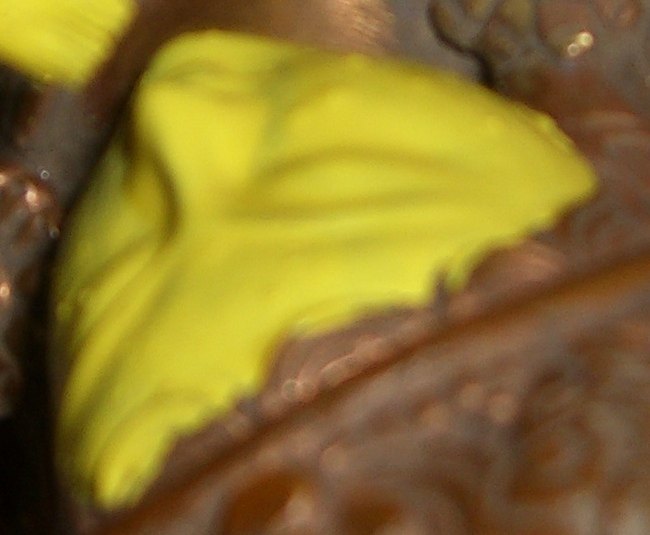
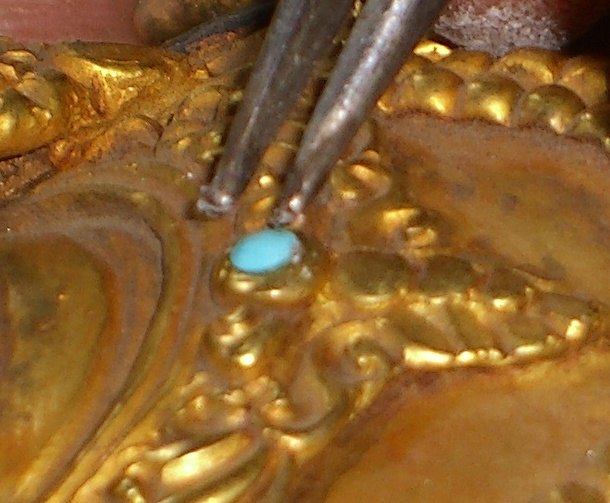
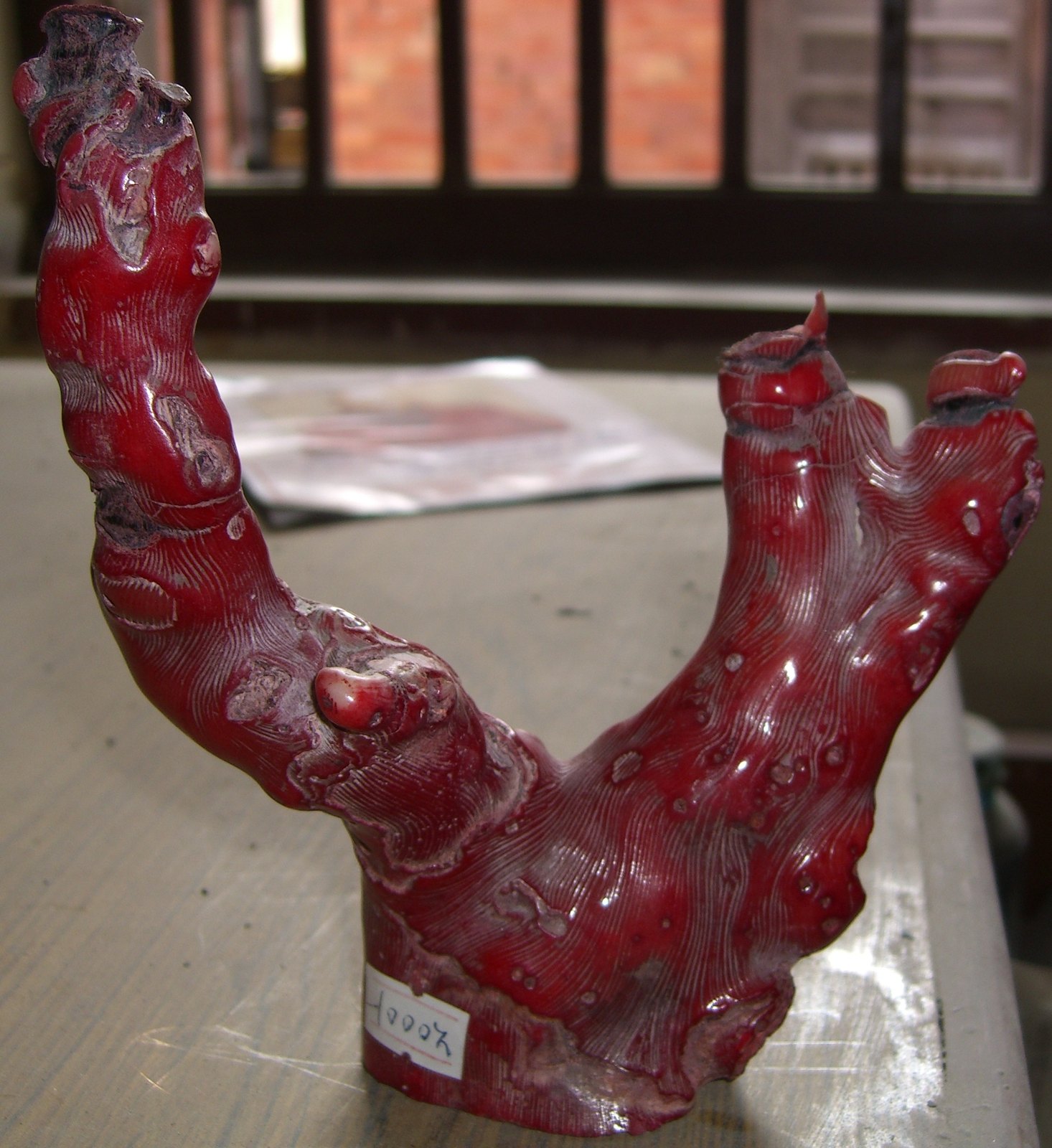
Stones were not glued in with modern adhesive. The cavities for them were made during chasing; each stone was chosen and ground to fit, then set in beeswax mixed with sheela and stone dust, softened briefly over a fire and pressed into the setting in small lumps. The stone was pressed in and excess wax removed with tweezers. Turquoise was imported, according to the craftsmen mainly from Afghanistan, Iran, Tibet or China; red coral was also used.
Wax-set stones can loosen or fall out over time, so missing or replaced inlays are common on older pieces. Note that trade in some precious corals may be subject to CITES rules; check current requirements with the authorities of the countries involved before buying or shipping.
Why does this matter when buying a statue?
Knowing the process helps you read a figure. Crisp, deliberate chased detail points to many hours of skilled hand work. Fire gilding bonds to the metal and wears through at high points to show copper, whereas gold paint tends to sit on the surface and flake. A gold face is painted separately, not part of the fire gilding, and stones set in wax rather than modern glue fit traditional practice.
Equally important: these workshops were producing such figures in 2006, and similar workshops still do today, with the same materials and much the same tools. Fine workmanship and traditional technique are therefore not by themselves a sign of age. Judge age from the whole picture, and ask for detailed photographs of the base, interior and surface; we can send additional photos on request.
Questions and answers
How long does it take to make a Nepalese copper Buddha?
It depends on size and quality. In the workshop Valentin visited, chasing alone was estimated at about six months of work per figure for one craftsman, and painting a face took about three hours.
Is each lost-wax statue unique?
Yes. Wax parts may come from reusable moulds, but each clay mould is broken to free the casting and every figure is finished by hand, so no two are identical.
How can I tell fire gilding from gold paint?
Fire gilding is bonded to the metal, is usually burnished and wears through on high points to show copper. Gold paint lies on the surface and tends to flake or rub off unevenly.
Is the gold on the face part of the gilding?
No. In the workshops documented, the face was left out of the fire gilding and later painted with gold leaf mixed with water and with pigments; on older figures such painting may have been redone.
Does traditional technique prove a statue is old?
No. Workshops in the Kathmandu Valley still make figures with the same materials and methods, so hand work alone is not evidence of age.
Is mercury fire gilding still used?
It was observed in 2006, but it releases toxic mercury vapour, endangers workers and is restricted in many countries today.
Written by Fine Asian Art as general background. It is not an appraisal of any individual piece; ask us about a specific object.